THE QUIET STRENGTH OF SERVICE | LOIS LAVUTUL AND THE GRACE OF A NEW GENERATION
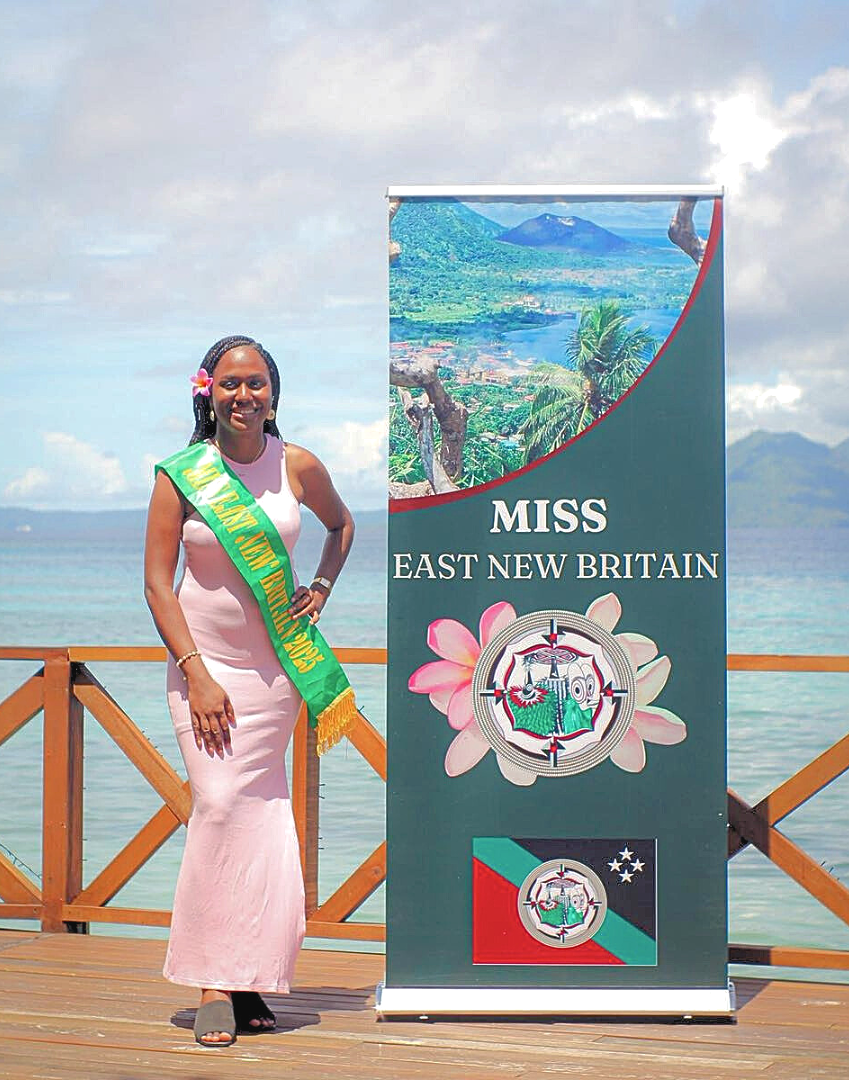
In Papua New Guinea’s East New Britain Province — where the sea folds gently into volcanic shores and history breathes through every village path — a new generation of leadership is quietly taking shape. It does not always arrive with loud declarations or grand gestures. Sometimes, it begins with something simpler: a young woman with a guitar, a law degree on the horizon, and a deep conviction that the future of her people deserves care, opportunity, and hope.
Her name is Lois Lavutul.
At just twenty-two years old, Lois carries with her the poise of someone who understands both privilege and responsibility — the delicate balance between personal achievement and communal duty. Born in October 2003 at St Mary’s Vunapope Hospital in Kokopo District, she entered a world already shaped by service. She is the third of five children, raised by parents whose professional lives have been dedicated to helping others: a father immersed in the legal world and a mother committed to the healing profession of healthcare.
For more than three decades, her parents have served the people of East New Britain. In their work, Lois witnessed a simple but powerful truth: that meaningful lives are built not only on success, but on compassion.
It is perhaps no surprise then that service runs through her like a quiet current.
Today, Lois stands as the current Miss Bird of Paradise – East New Britain 2025–2026, a title that places her among a lineage of young Papua New Guinean women who represent grace, intelligence, and cultural pride. But the crown, for her, is not the destination. It is merely a platform — a doorway through which she hopes to advocate for something much larger than herself.
Because while Lois represents beauty and elegance on the stage, her deepest passions lie elsewhere: in classrooms, communities, and the untapped potential of young people across the province she calls home.
A PROVINCE THAT RAISED HER
Lois’ story is deeply rooted in East New Britain.
Although born in Kokopo, her family returned permanently to the province in 2011, a move that would shape the trajectory of her life. Her formative years were spent within the halls of Vunapope Sacred Heart International Catholic College, a place where discipline, faith, and academic excellence were woven together.
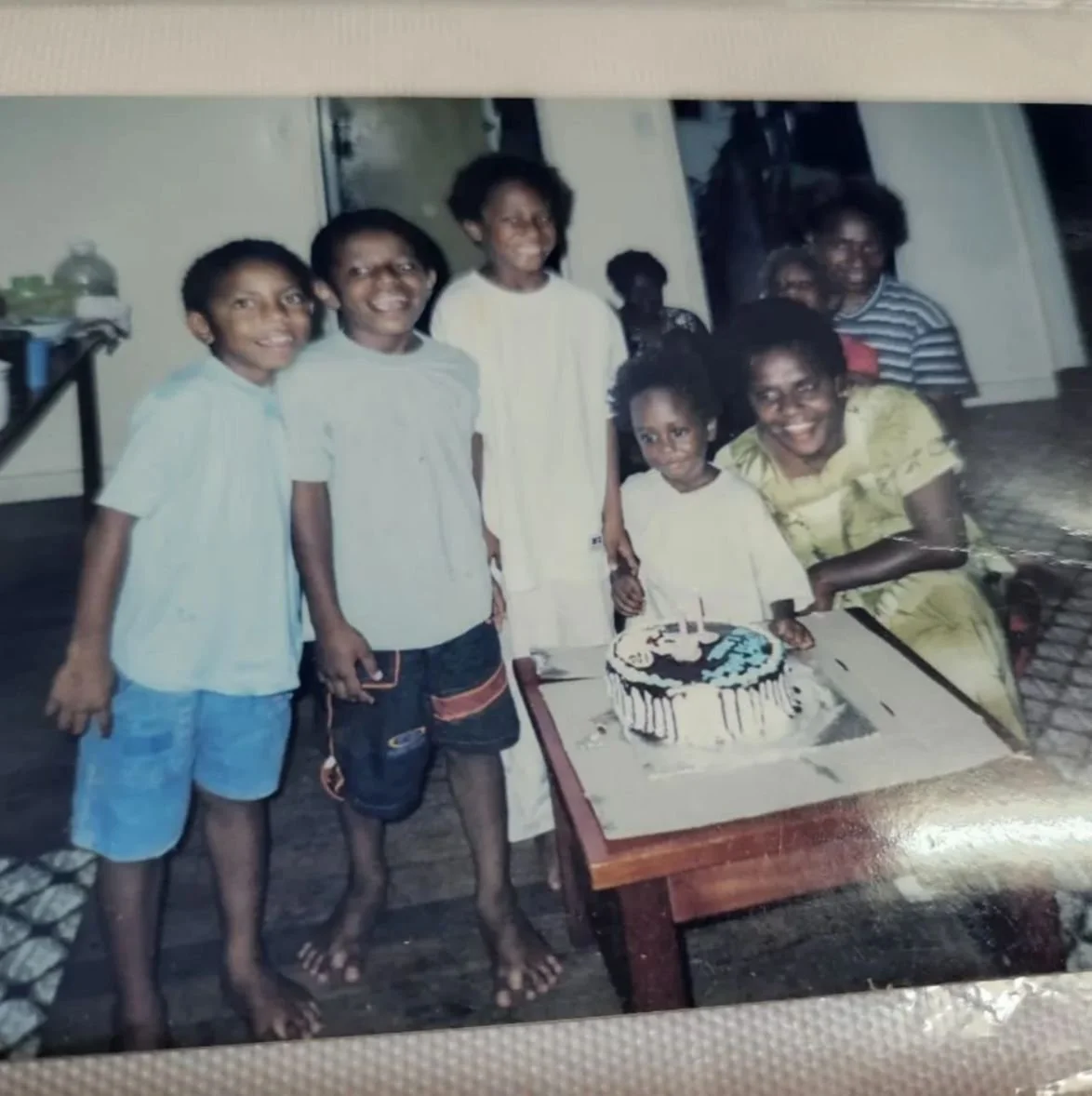
A quiet beginning. This photo was taken on my second birthday at Government Hill in Kokopo Town — long before I knew the journey life would take me on, but already rooted in the place that would shape who I am today
Later, she continued her primary education at Kokopo Primary School, graduating with her Primary Education Certificate before moving on to Kokopo Secondary School — now known as Kokopo Technical Secondary School — where she completed Grades 9 and 10.
Her academic ability soon distinguished her among her peers. She was selected to complete her final years of secondary education at the prestigious Kerevat National School of Excellence, one of Papua New Guinea’s most respected institutions for high-achieving students.
Each step of her educational journey was not only an achievement but a privilege she recognizes with humility.
Because while Lois moved forward through school, she also began noticing something unsettling around her.
A quiet shift.
Fewer young people from East New Britain were making it into tertiary institutions. School Mean Rating Indexes were declining. More students were returning home after failing to secure placements, while others dropped out altogether.
And for many of those young people, the consequences were harsh.
Without opportunities, some drifted toward crime — a reality Lois describes with sadness, because it is not reflective of the spirit of East New Britain’s people.
“We would go down a rabbit hole discussing all the reasons why,” she says thoughtfully. “But at the heart of it is something simple. When young people lose access to education and opportunity, they begin to lose hope.”
It is a realization that has shaped her ambitions.
A LAW DEGREE — AND A PURPOSE
In April, Lois will graduate from the University of Papua New Guinea with a Bachelor of Law, marking the culmination of years of discipline and determination.
But for her, law is not simply a career path.
It is a tool.
A means through which she hopes to understand systems, advocate for fairness, and support communities navigating complex realities.
Growing up in a household where both parents dedicated their careers to solving people’s problems — whether in courtrooms or clinics — Lois developed an instinct for empathy.
Helping others, she explains, was never framed as a heroic act in her home. It was simply the natural thing to do.
“Helping people is not just about feeling proud,” she reflects. “It’s about understanding where they are in life and how you can add value in the small things.”
And often, those small things begin with education.
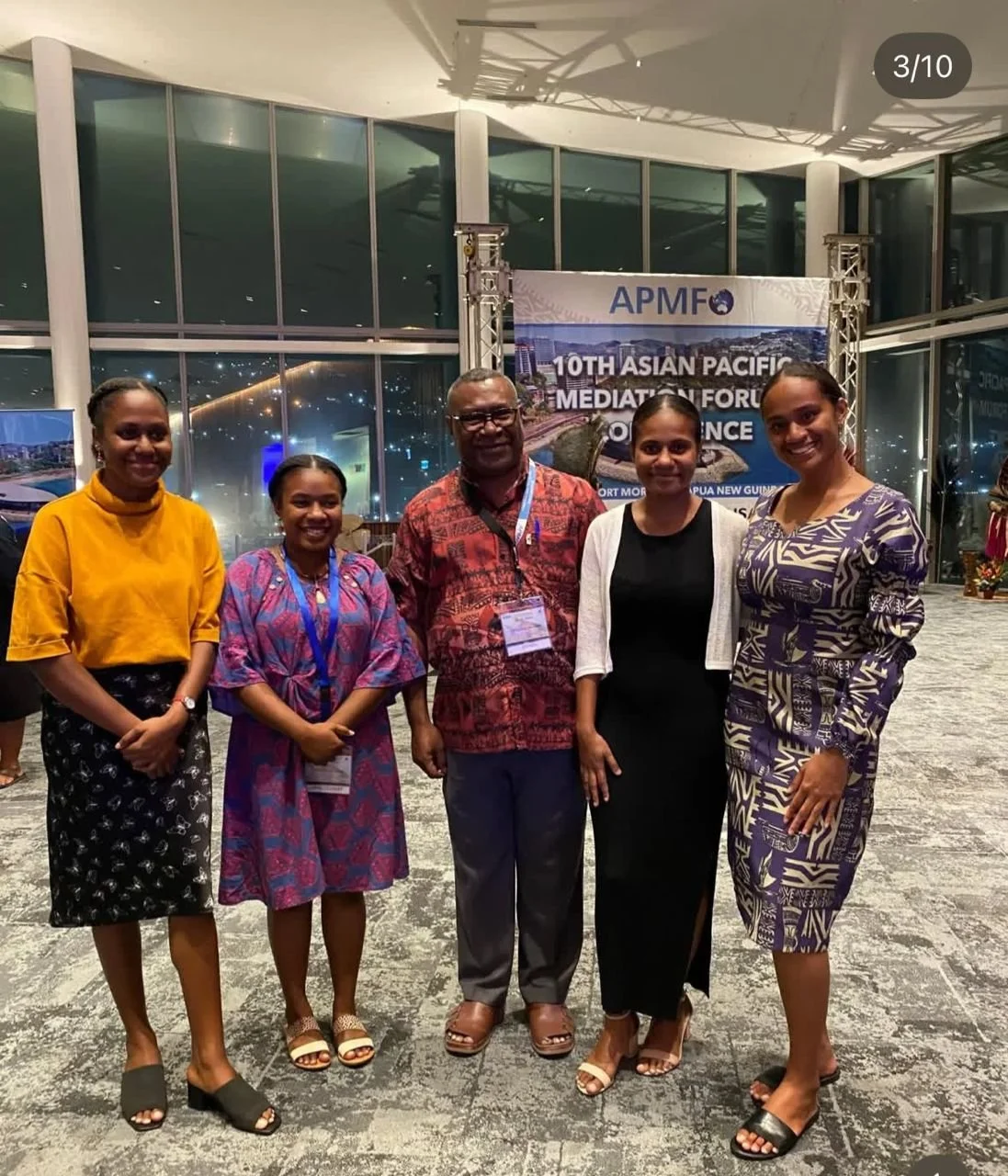
With my course mates and our respected lecturer from UPNG Law School, Mr Michael Steven Wagambie — moments like these remind me how far the journey has come.
REIMAGINING OPPORTUNITY
For Lois, the idea of education goes far beyond textbooks and classrooms.
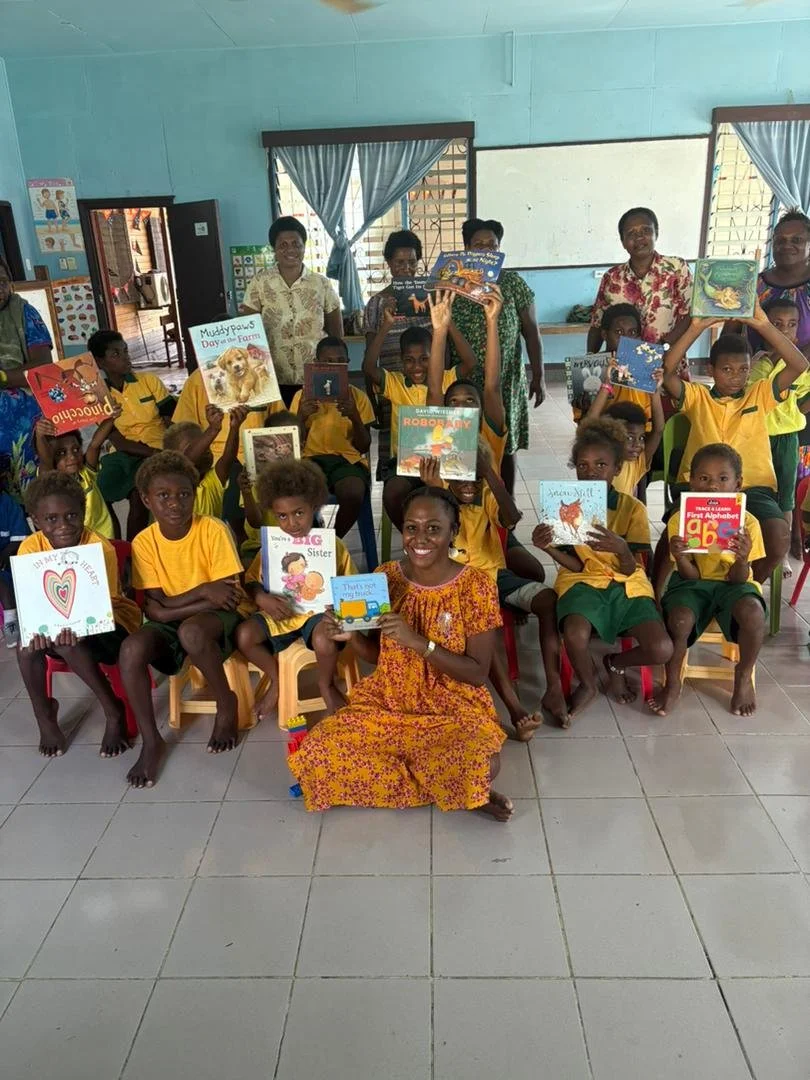
She dreams of creating spaces where learning feels alive again — where young people feel seen, encouraged, and inspired.
She imagines provincial school debates that sharpen minds.
Spelling bee competitions that celebrate curiosity.
Sports carnivals that foster teamwork and discipline.
She envisions improving classroom environments, introducing personal development programs, and ensuring that opportunities extend to people living with disabilities, who are too often left out of traditional systems.
To Lois, these initiatives are not grand political promises.
They are practical acts of care.
“I was fortunate,” she admits. “I never had to worry about whether my school fees would be paid. But for many families across Papua New Guinea, that is not the reality.”
With much of the country’s population working in informal economies, the struggle to educate children is constant.
“And if families are already struggling,” she says gently, “then the least we can do is make sure the learning environments we create truly support them.”
These are ideas she began developing during her university years — ideas that ultimately encouraged her to enter the Miss Bird of Paradise pageant.
Not for fame.
But for a platform.
Now that the pageant is over and the spotlight has faded, she remains just as committed to seeing those ideas take shape.
MUSIC, FAITH, AND THE SOUL OF RABAUL
Beyond the intellectual discipline of law and community advocacy, Lois carries another deeply personal passion: music.
Raised in a strong Christian home, music has always been part of her life. While she plays guitar with quiet confidence, her true gift lies in her voice.
During the Miss Bird of Paradise pageant, she chose to perform a song that resonates deeply with the people of East New Britain — “Rabaul Town” by John Wong.
Accompanied by simple acoustics, the performance was heartfelt and sincere — less a performance than a tribute to place, memory, and identity.
Because for Lois, music is not just entertainment.
It is storytelling.
A way of honouring where she comes from.
THE WOMAN BEHIND THE CROWN
Today, Lois’ journey is also guided by the mentorship of Dame Sandra Geok Mei Lau, one of East New Britain’s most respected business leaders and philanthropists.
As the owner of Tropicana Ltd, Dame Sandra has long been known for her commitment to community development and youth empowerment.
Under her mentorship, Lois has begun exploring small but meaningful ways to give back to the province — initiatives that may appear modest but carry the potential for lasting impact.
For Lois, Dame Sandra represents something powerful: the example of a woman who built success while remaining deeply connected to her community.
And it is precisely that model of leadership Lois hopes to emulate.
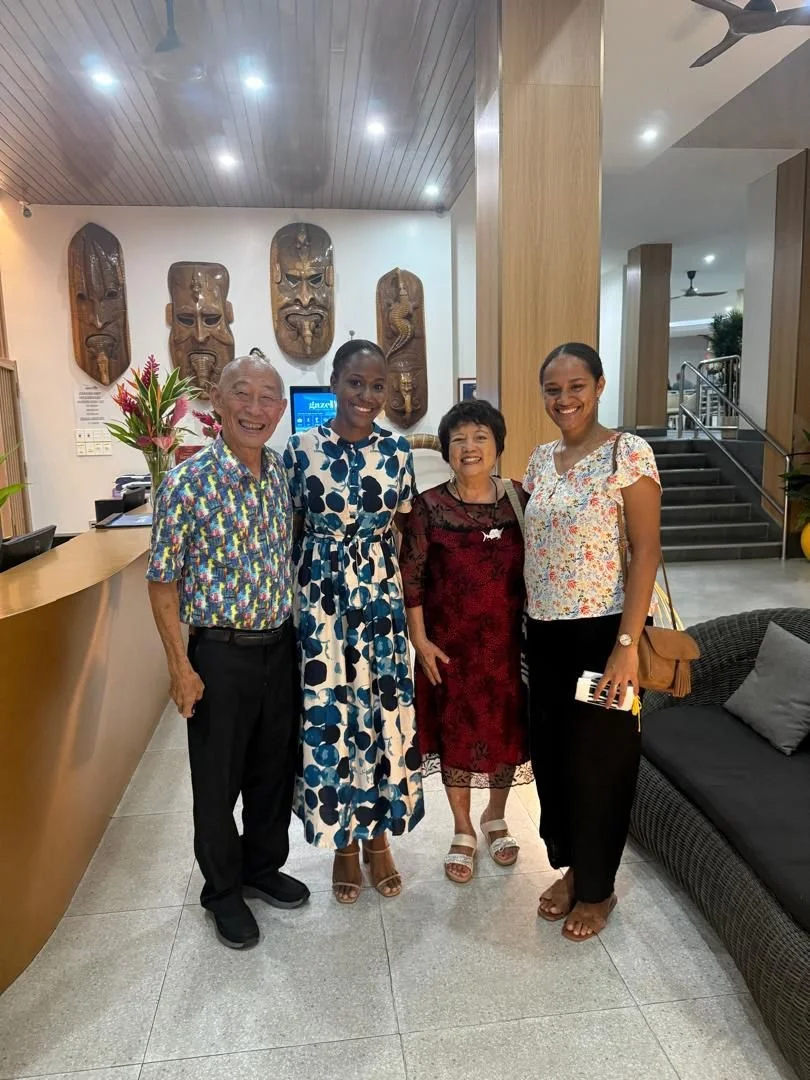
With Mr John Lau and Dame Sandra Geok Mei Lau, whose mentorship continues to inspire my journey. As the owner of Tropicana Ltd, Dame Sandra is one of East New Britain’s most respected business leaders and philanthropists, known for her strong commitment to community development and youth empowerment.
THE PRIVATE WORLD OF A DREAMER
Away from the public stage, Lois’ life is filled with simple joys.
She loves reading, often losing herself in books that stretch her imagination and understanding. She keeps journals, recording reflections and ideas — small fragments of thought that may one day shape future projects.
She also enjoys crafting and sewing, skills she has largely taught herself through online tutorials.
“Everything is at our fingertips now,” she laughs. “Technology makes it possible for us to learn almost anything.”
It is this quiet curiosity — this desire to keep learning — that defines her.
FAITH AS FOUNDATION
At the heart of Lois’ worldview lies a verse that has guided her through life.
Romans 8:31:
“What then shall we say about such wonderful things as these? If God is for us, who can be against us?”
For Lois, the verse is not simply scripture.
It is reassurance.
A reminder that the blessings people experience in life are rooted in the profound act of love described in the Gospel — the gift of salvation.
And if that love exists for all people, she believes it must also be shared.
“If God has given us these blessings,” she says quietly, “why not share them? Why not use them to make other people’s lives better?”
A FUTURE STILL UNFOLDING
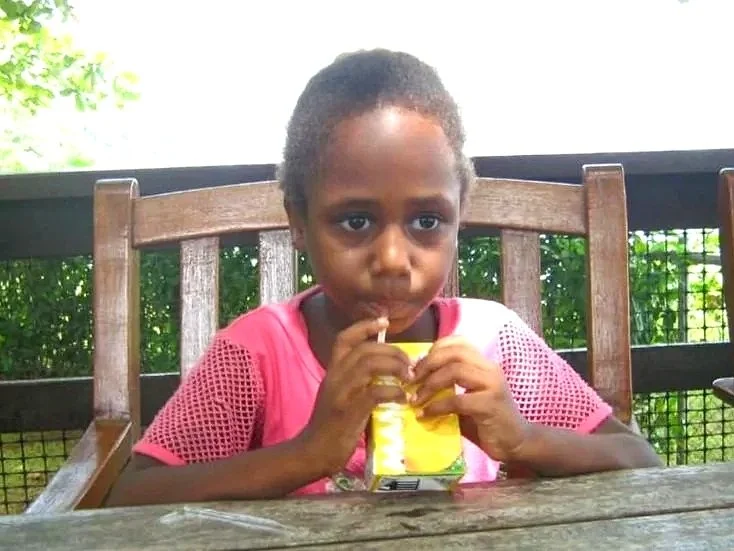
Taken at the Lihir Island Club House in 2008 — a special memory from the years my family called Lihir home from 2006 to 2008
Lois Lavutul is only at the beginning of her journey.
A soon-to-be law graduate.
A daughter of East New Britain.
A young woman shaped by faith, education, and service.
She does not claim to have all the answers.
But she carries something perhaps more important: intention.
The intention to invest in her people.
To uplift young minds.
To honour the province that raised her.
And to prove that leadership, at its best, is not about power or prestige.
It is about care.
In a world often captivated by loud voices and grand promises, Lois Lavutul represents something quietly revolutionary.
A generation of Papua New Guinean women who lead not with noise — but with purpose.
And sometimes, that is the kind of leadership that changes everything.