WHEN BILAS BECAME A CROWN | WARREN LUMBIA AND THE DRESS THAT CARRIED PAPUA NEW GUINEA INTO HISTORY

In fashion, there are garments.
And then there are garments that become history.
Some dresses are designed for the runway.
Others are designed for memory.
But once in a generation, a designer creates something that carries something greater — a story, a people, a country.
For Papua New Guinea, that moment arrived through the hands of a young designer from a small highlands town — a place where the roads are quiet, the mountains stand watch, and the rhythm of life is measured not by fashion calendars but by community, culture, and ceremony.
His name is Warren Lumbia.
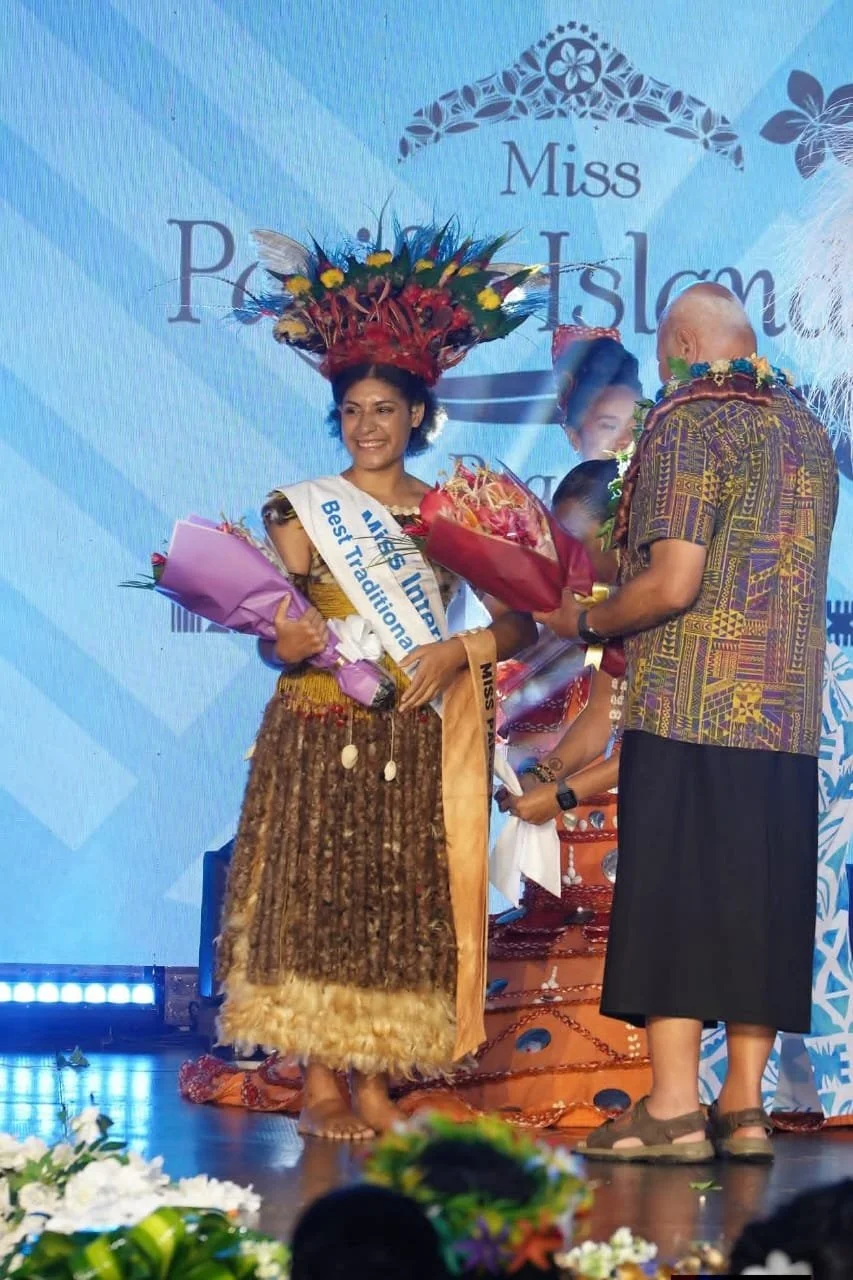
And the dress he created would go on to win Best Traditional Inspired Dress at the Miss Pacific Islands Pageant — the first time Papua New Guinea had ever claimed this title.
But the journey to that moment was not lined with luxury studios, glossy ateliers, or limitless budgets.
It was built from borrowed feathers, hired bilas, sleepless nights, and a love for culture so deep it refused to fail.
A BOY FROM KUNDIAWA
Warren Lumbia grew up in Kundiawa, the heart of Simbu Province — a town where everyone knows each other and where community is not an abstract idea but a living, breathing reality.
It is the kind of place where family extends beyond bloodlines.
When he introduces himself, Warren often says something that carries the quiet poetry of identity in Papua New Guinea:
“My dad is from East Sepik, Angoram, Timboli, and my mum is from Simbu, Gumine, Mian Kaleku. But I am from Kundiawa — not by blood, but by bone.”
Bone — the word says everything.
Because Kundiawa did not just shape where he lived.
It shaped who he became.
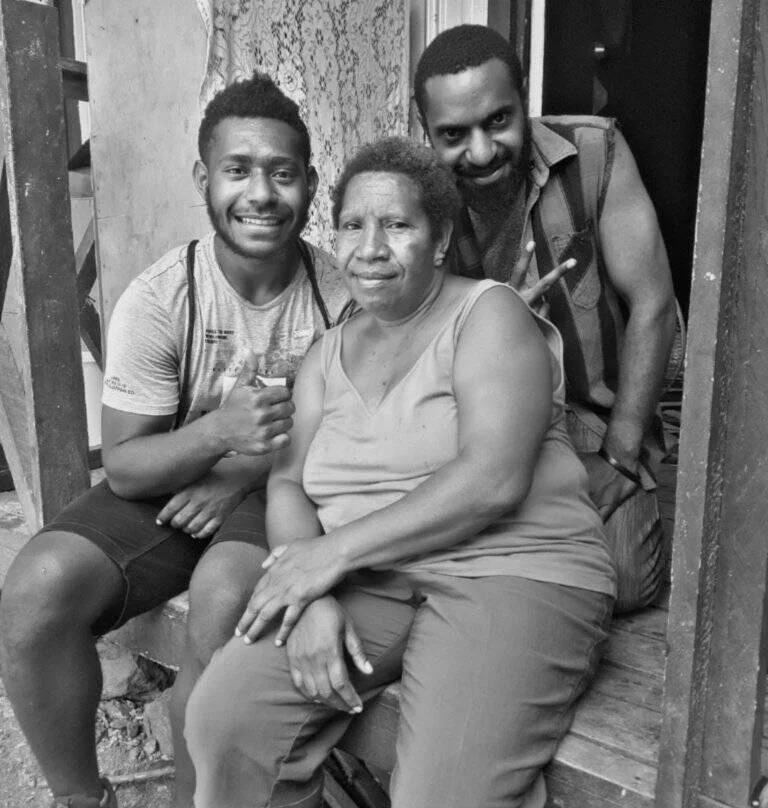
Fashion, in many ways, entered Warren’s life not through glamour but through everyday survival.
His auntie, Sophie Kunal, owned a small tailoring company called Willows Wear. The sewing room became his playground.
As children, Warren and the others would help their mothers and aunties sew garments just to earn small flex card credits or lunch money.
But something happened in that room filled with thread, fabric, and humming machines.
A spark.
A curiosity.
A fascination with transformation.
Fabric became possibility.
Needle became language.
And slowly, without anyone realizing it, a designer was being formed.

THE CULTURE THAT SHAPED HIS EYE
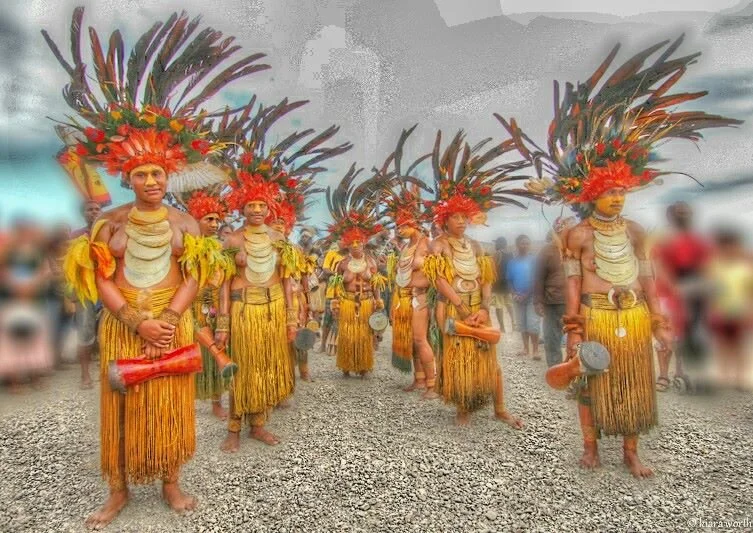
Growing up in Simbu means growing up surrounded by some of the most visually powerful cultural regalia in Papua New Guinea.
The Simbu bilas is not subtle.
It is dramatic.
Explosive with color.
Feathers that rise like flames.
Shells that carry the weight of tradition.
Fur, fibers, and ornaments layered with meaning.
Every element has a purpose.
Every material carries a story.
For Warren, fashion was never just about clothing.
It was about identity.
It was about culture.
It was about storytelling through materials.
Where others saw decoration, Warren saw narrative.
THE MOMENT EVERYTHING CHANGED
The first piece he ever created was simple — a men’s polo shirt.
But when he finished it, something extraordinary happened.
Someone wore it.
And in that moment, Warren felt a feeling every designer recognizes instantly — the quiet electricity of seeing something that existed only in your mind suddenly become real.
It was the beginning.
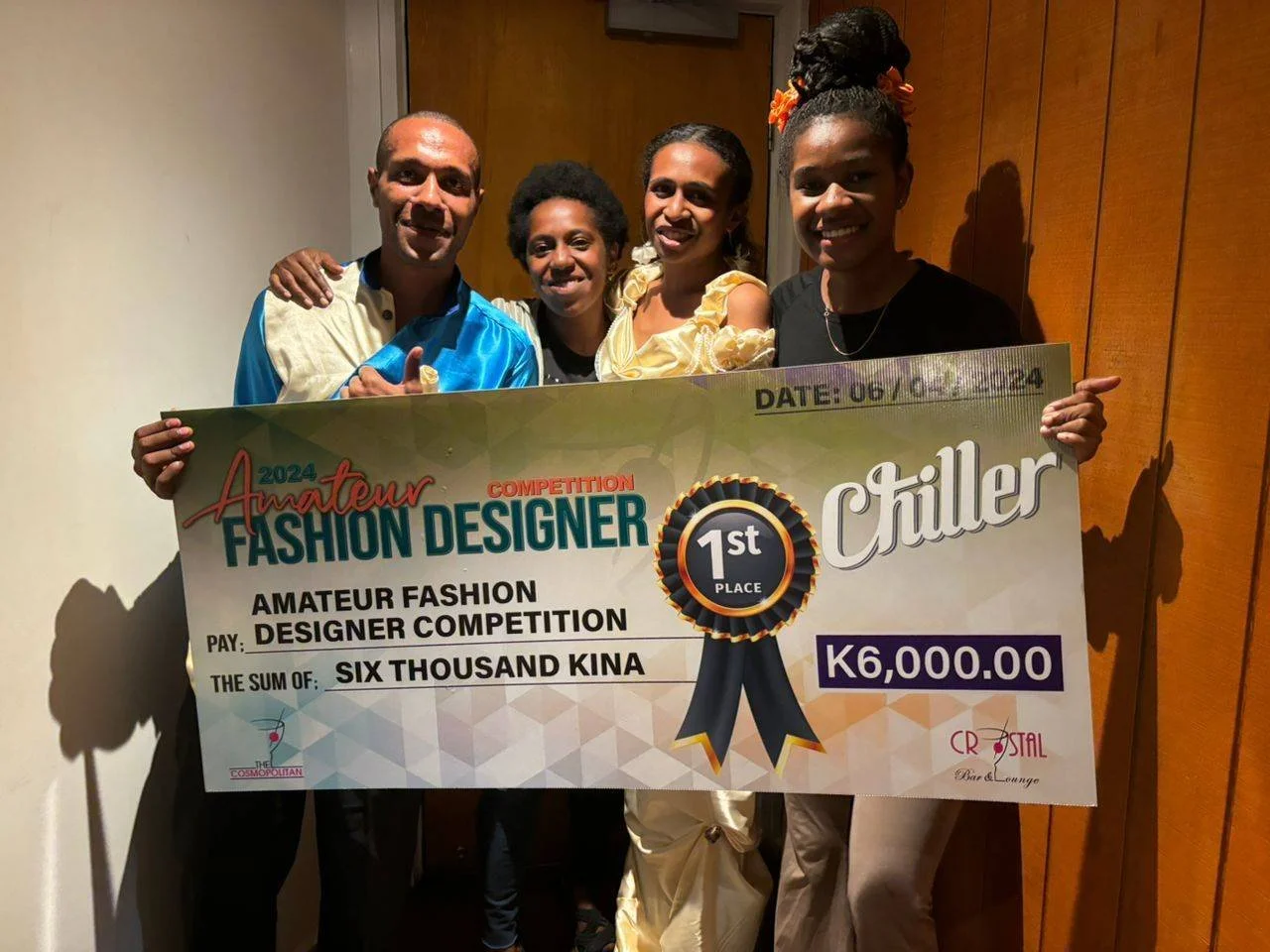
Soon after, he entered an amateur fashion competition sponsored by Chillar and Cosmopolitan Nightclub. He had seen the advertisement on Facebook and decided to take a chance.
That chance changed everything.
He made it to the grand final.
And then he won.
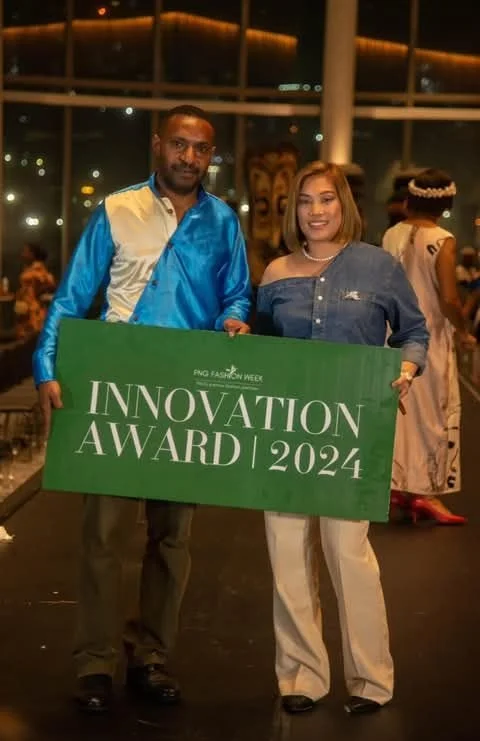
Later that same year, in 2024, he showcased his work at PNG Fashion Week, where he was awarded the Innovation Award.
Standing backstage, watching his designs walk down the runway, Warren felt the weight of the journey behind him.
From the sewing rooms of Kundiawa to the national fashion stage.
But his greatest challenge was still ahead.
DESIGNING FOR A NATION
When the Miss Pacific Islands Pageant released an Expression of Interest inviting designers to submit concepts for the Traditional Inspired Dress, Warren knew he had to try.
This was not just about fashion.
This was about representation.
About how Papua New Guinea would appear before the Pacific.
His design was selected.
An enormous honour.
But also an enormous responsibility.
He wanted something the pageant had never seen before — a dress that united the highlands and the coast, tradition and modern couture.
At its heart was the spirit of Simbu bilas.
But interpreted through a designer’s eye.
THE MAKING OF A MASTERPIECE
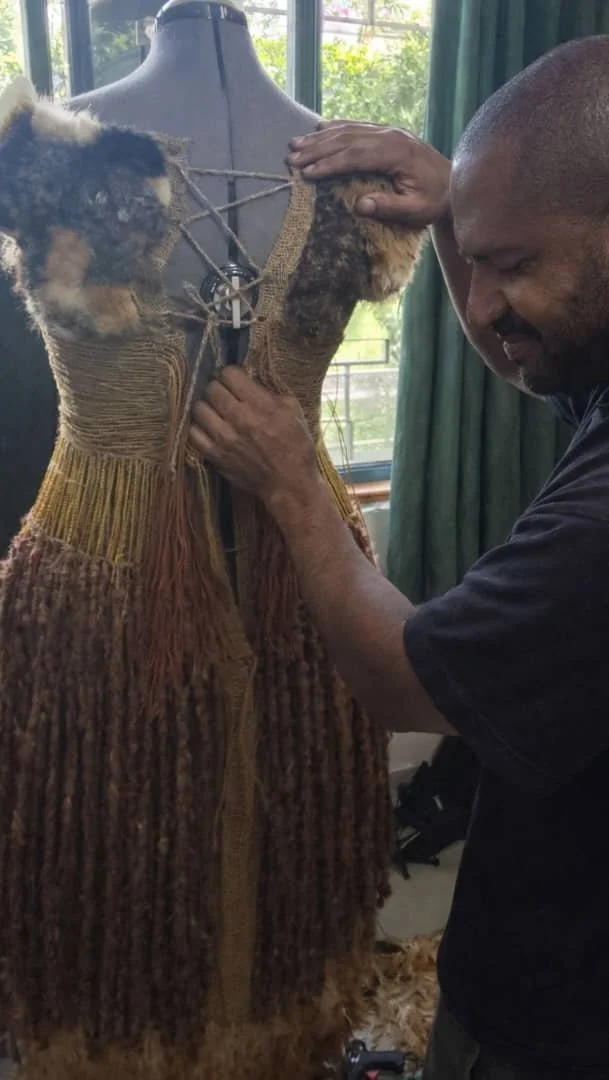
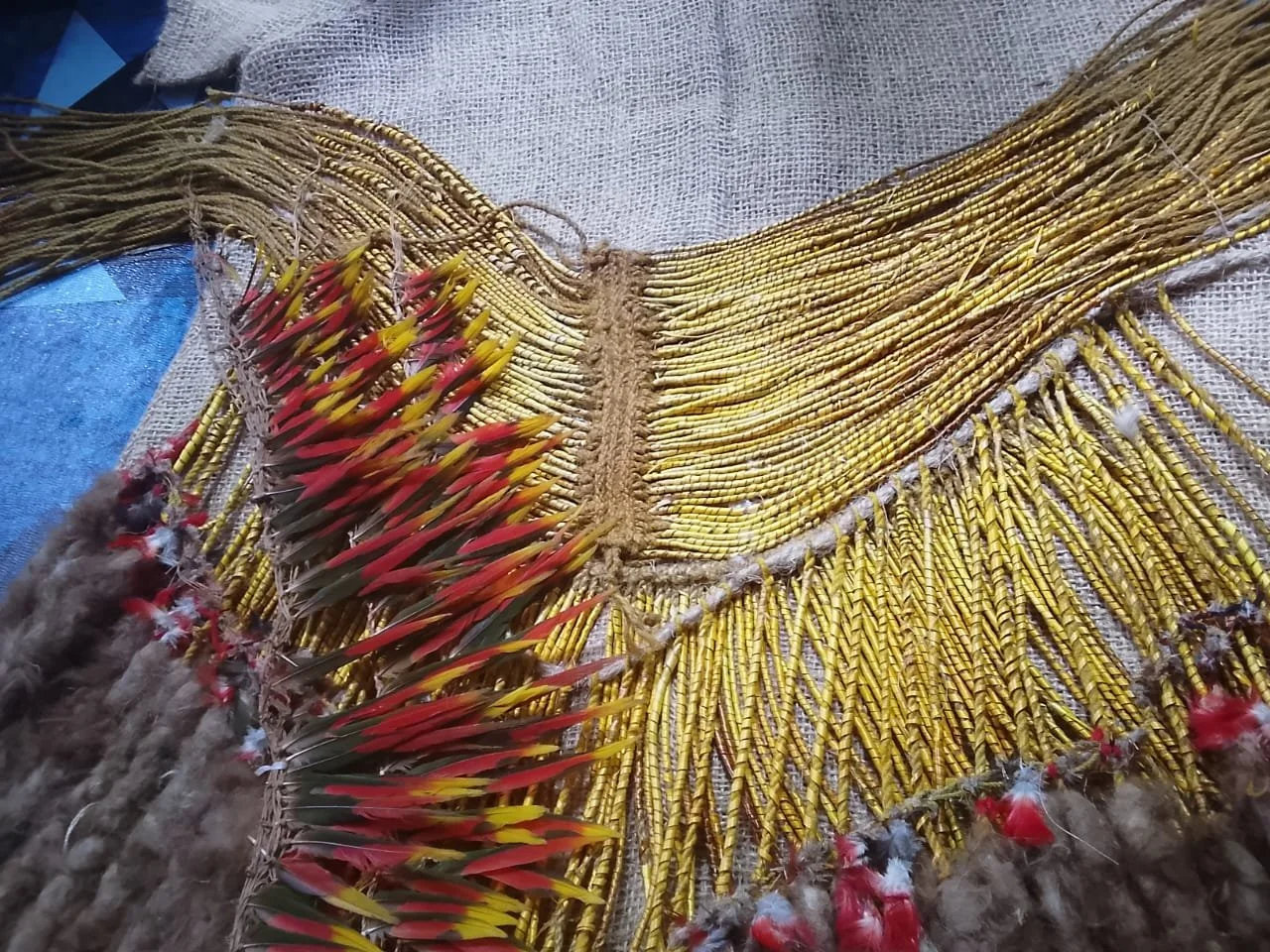
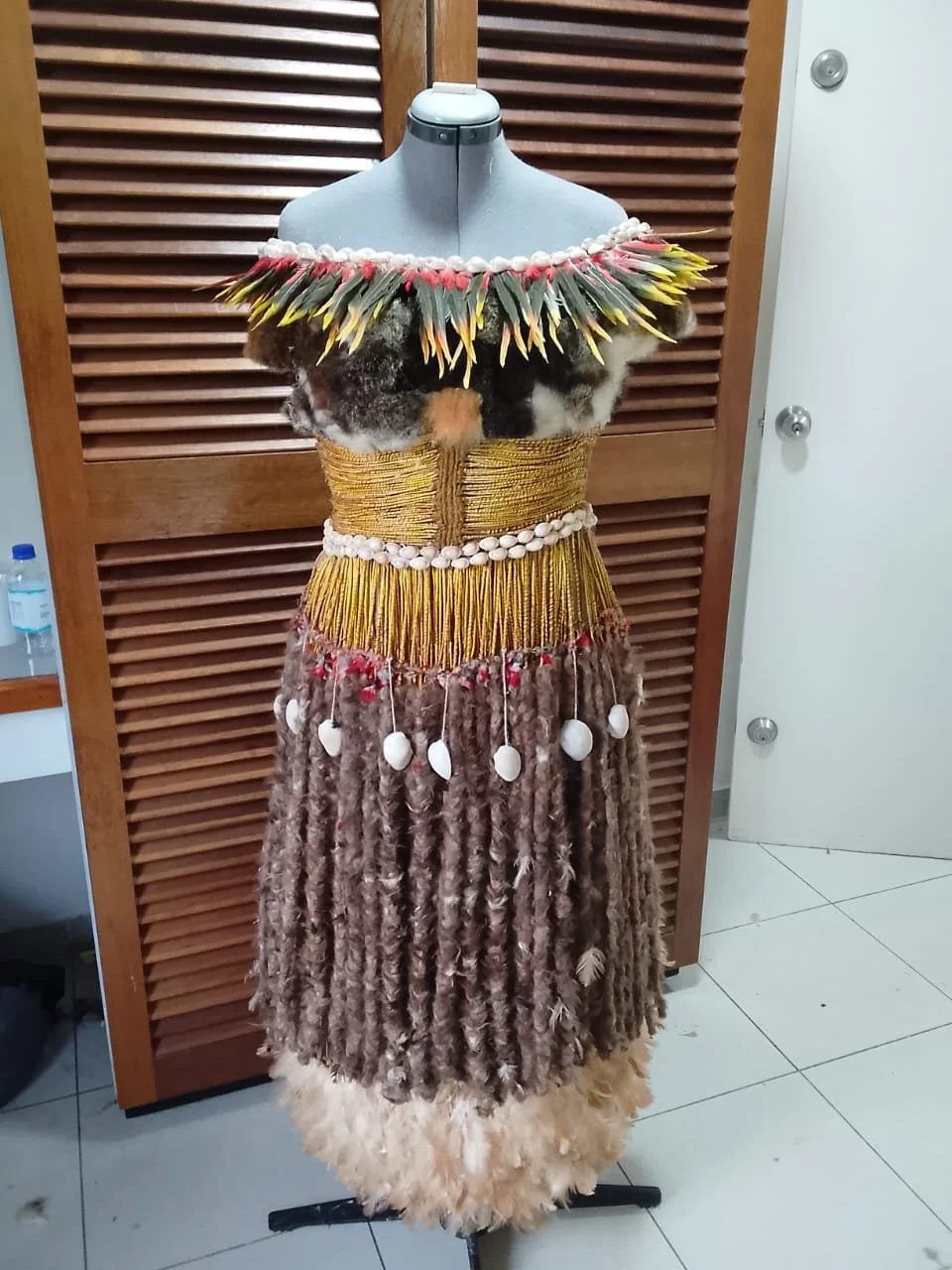
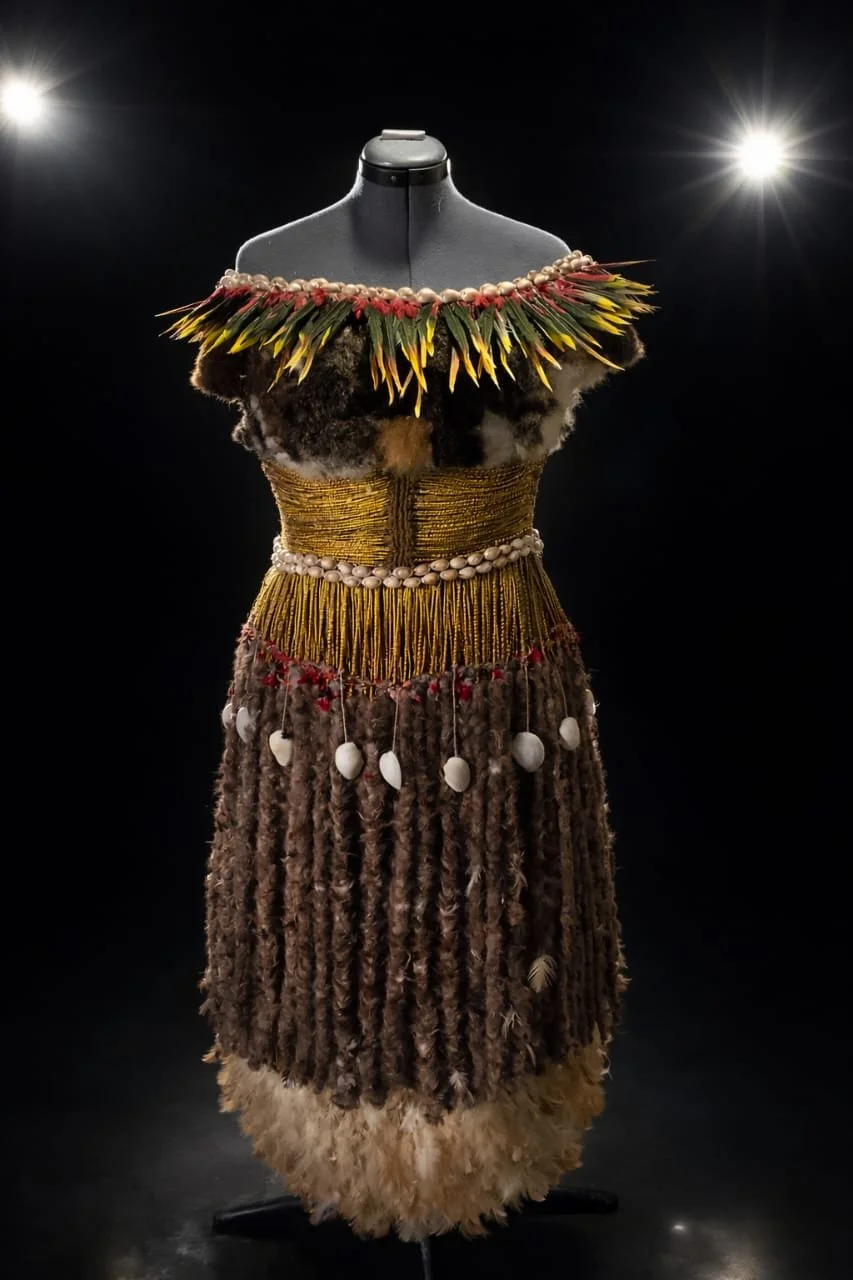
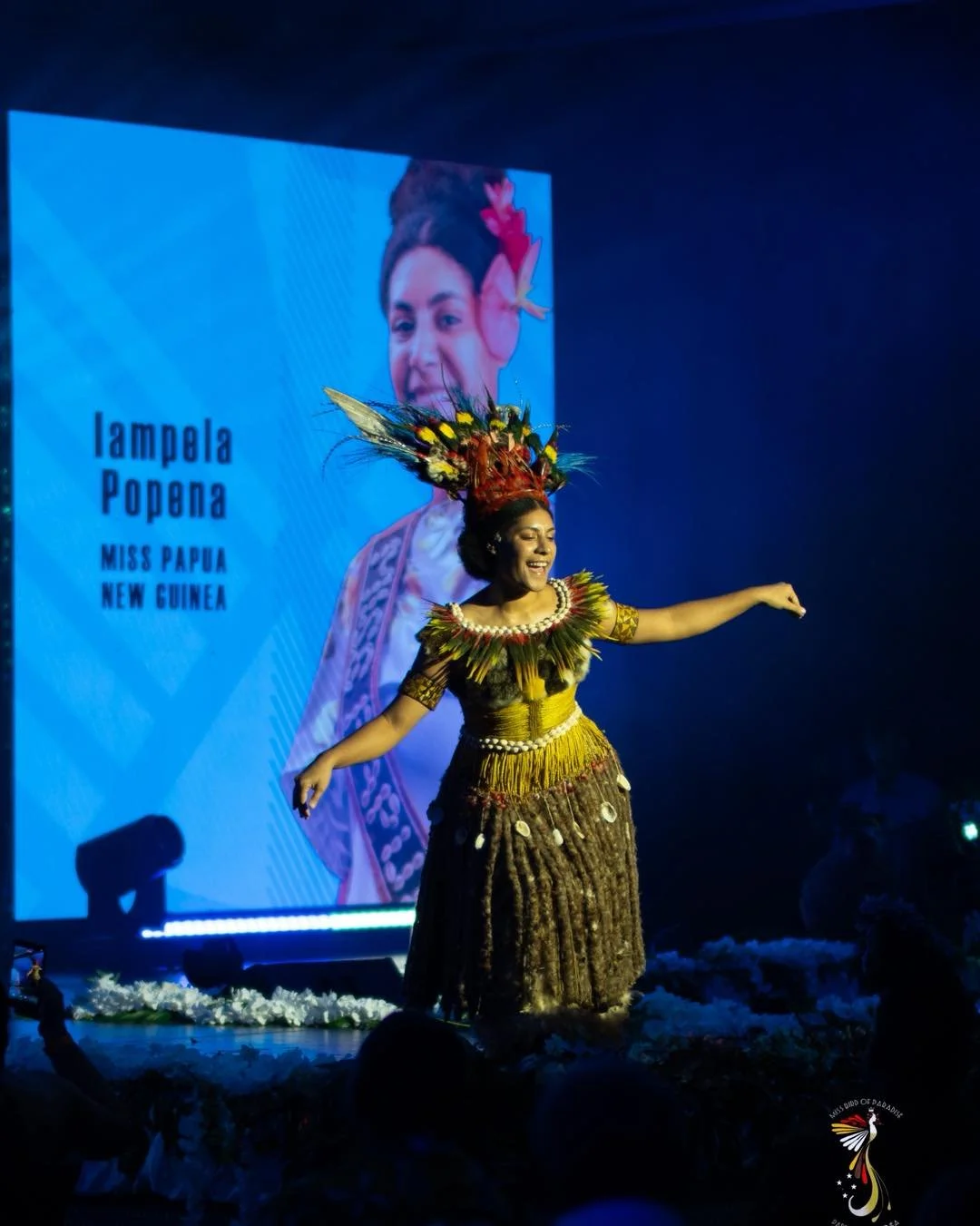
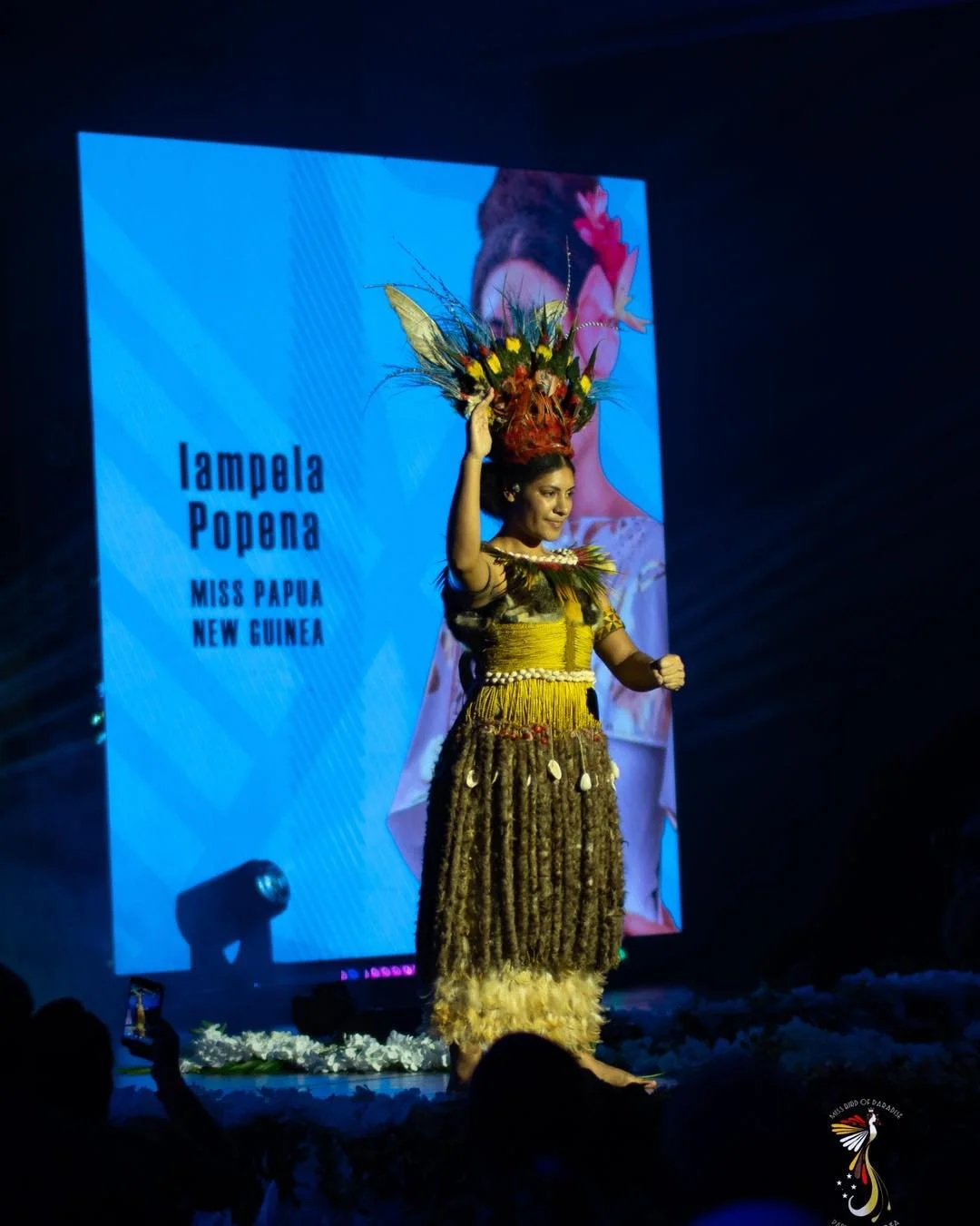
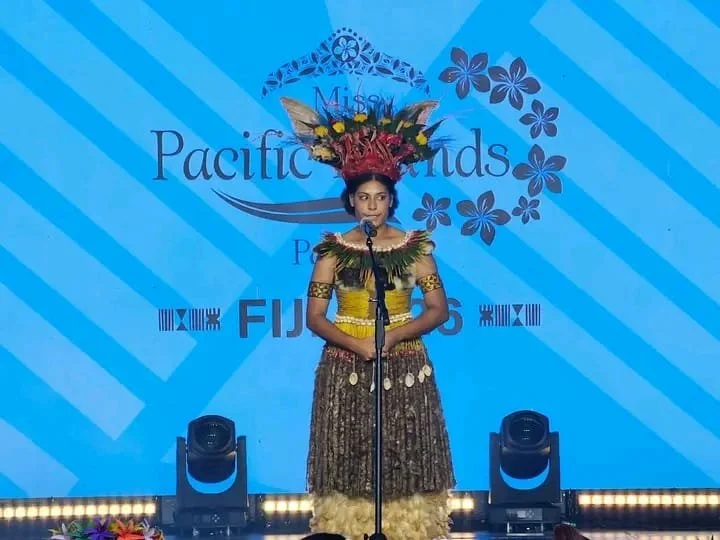
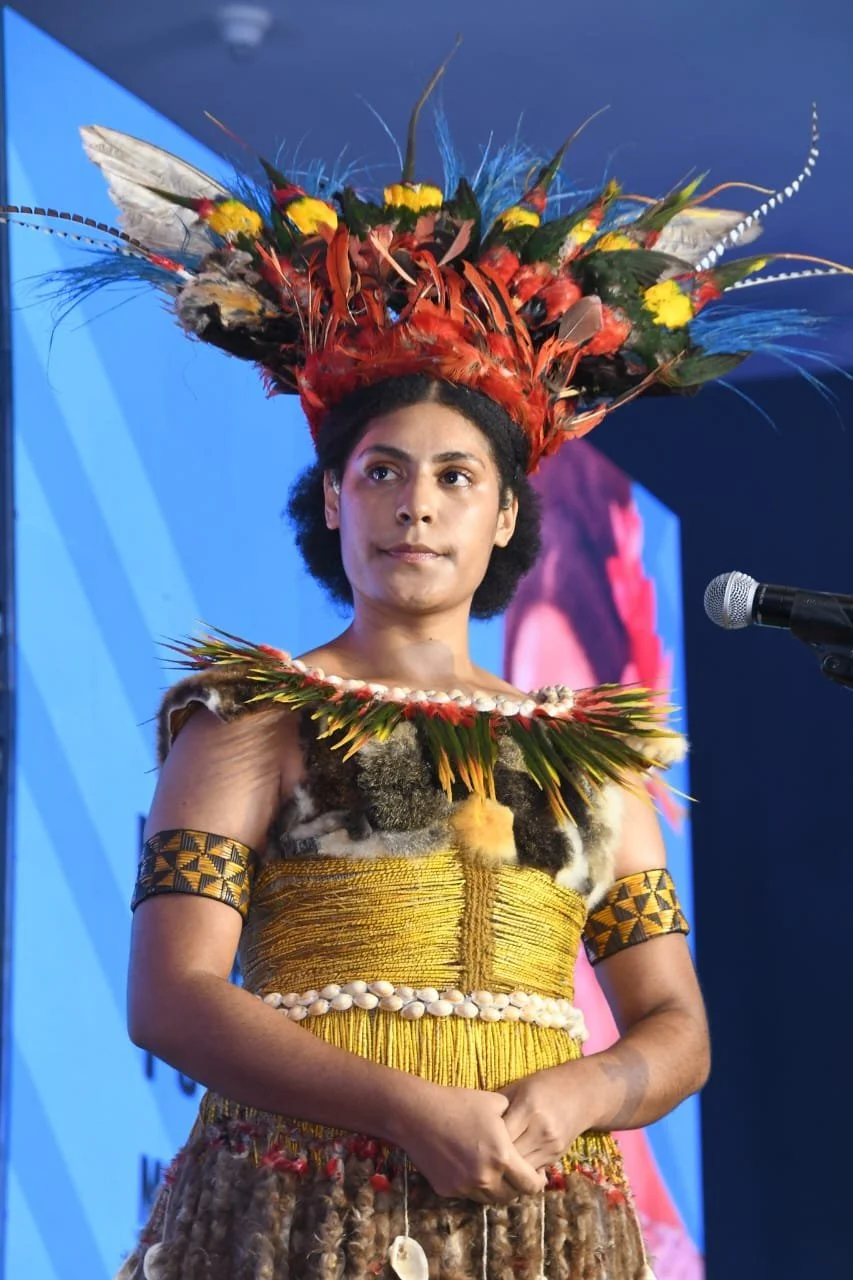
The dress began with orchid stems, rising from the waist to beneath the bust — delicate yet symbolic, evoking growth and life.
Across the bust and shoulders, Warren placed cuscus fur, creating texture and warmth.
Around the neckline exploded a vibrant collar of parrot feathers, edged with tabu shells that caught the light like small constellations.
From the waist down flowed the most dramatic element — a purpur skirt made from possum fur, meticulously aligned.
Beneath it, brown bird feathers created movement, depth, and rhythm.
Every element was intentional.
Every element carried meaning.
And then there were the kina shells.
Traditionally worn at the front of bilas, the pageant requested they be placed at the back.
They were heavy.
So heavy, in fact, that on the night of the crowning they slightly pulled the back of the dress down.
But Warren smiles at the memory.
“It was all part of the experience.”
THE STRUGGLE BEHIND THE BEAUTY
What the audience never saw was the struggle behind the garment.
The pageant had no sponsor for the Traditional Inspired Dress.
Warren agreed to create it with only 50 percent payment, which he received just six days before the queen travelled to Fiji.
Six days.
Six days to create a dress that would represent an entire nation.
The funds were not enough.
Many of the traditional materials were incredibly expensive.
So Warren did what designers across Papua New Guinea have always done.
He relied on community.
He hired bilas materials from cultural custodians, carefully borrowing rare feathers and ornaments for eight days.
The Simbu bilas is among the most expensive traditional regalia to hire in Port Moresby.
Still, Warren used every kina he received — and added his own money.
Not for profit.
Not for recognition.
But for one reason.
He wanted Papua New Guinea to bring home the crown.
THE NIGHT HISTORY WAS MADE
When the queen stepped onto the stage wearing the dress, something shifted.
The feathers moved like wind through the mountains.
The shells glowed under the lights.
The textures of fur, feathers, and orchid stems created a silhouette unlike anything the judges had seen.
It was bold.
It was cultural.
It was unmistakably Papua New Guinean.
And when the announcement came — Best Traditional Inspired Dress — it marked a historic moment.
For the first time ever, Papua New Guinea had won the category.
Behind that moment stood a young designer from Kundiawa who had built a masterpiece from borrowed materials and unwavering belief.
THE FUTURE OF PNG COUTURE
For Warren, the victory is not an ending.
It is the beginning of a much larger dream.
He envisions a Traditional Fashion Gallery — a permanent exhibition where modern interpretations of bilas from all 22 provinces of Papua New Guinea are displayed.
A space where tourists and locals alike can experience the beauty of PNG’s cultural fashion heritage.
Each design would tell the story of a province.
Its environment.
Its people.
Its identity.
Fashion not as costume.
But as living culture.
A DESIGNER WHO CARRIES A COUNTRY
When asked what he hopes people will one day say about him, Warren answers simply.
That he was a designer who carried the culture of Papua New Guinea into the world with pride.
That he respected the custodians of traditional bilas.
That he honoured tradition while imagining new futures.
And perhaps most importantly — that his work inspires the next generation.
Because if a boy from a small town like Kundiawa can create a dress that wins on the international stage…
Then somewhere, right now, another young designer in Papua New Guinea is already dreaming of the next one.
And when they do, they will be following the path that Warren Lumbia has begun to stitch into history.