WILLIAM MABA BRAY | CULTURAL COUTURE FROM THE SHORES OF MOTU-KOITABU
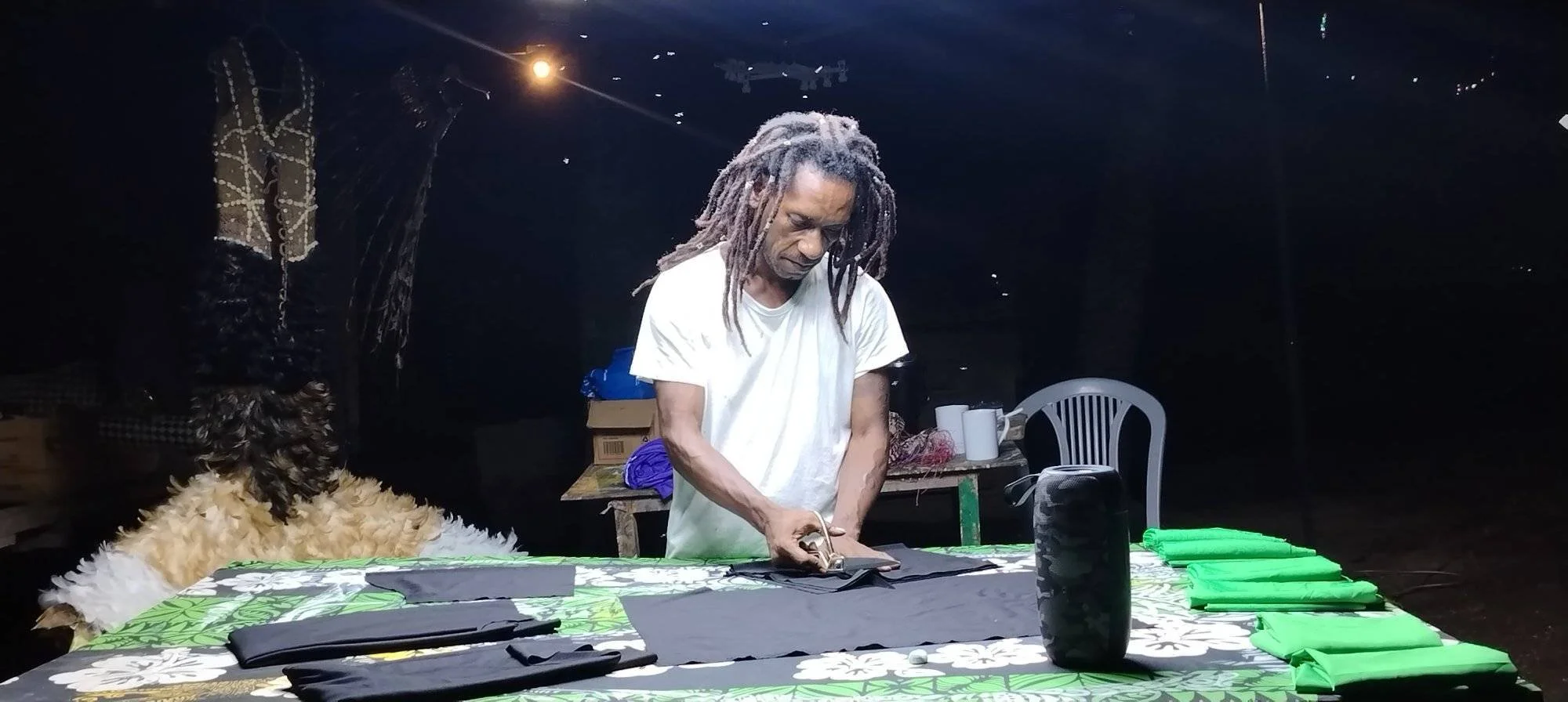
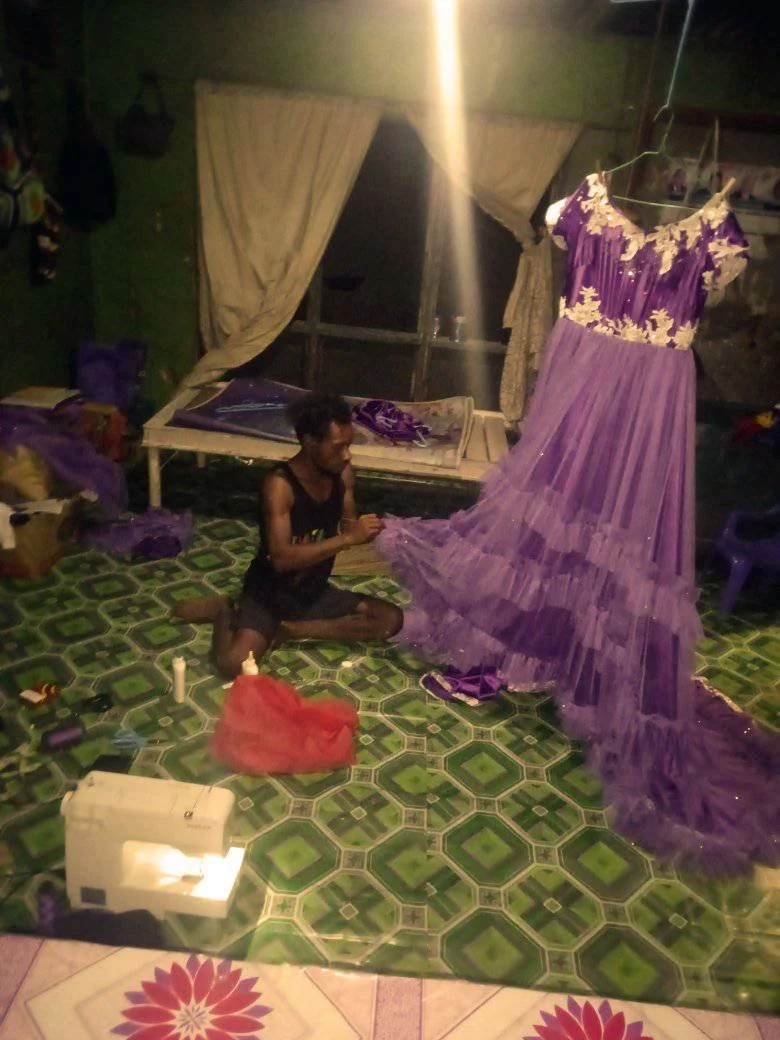
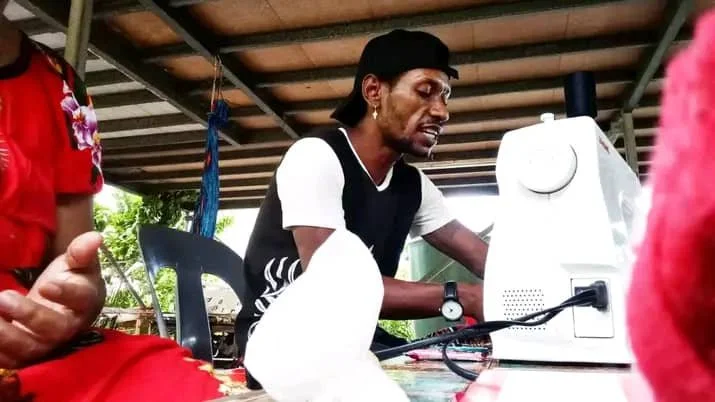
In the quiet corners of Six Mile in Port Moresby, long after most of the city has gone to sleep, the soft hum of a sewing machine continues to echo through a small home workshop.
Around the table are sketches, fabrics, shells, feathers and pieces of carefully layered material waiting to become something extraordinary.
At the centre of it all sits William Maba Bray, a designer whose journey into fashion did not begin with fame, runways or fashion schools.
It began with a grandmother and a sewing machine.
At just eight years old, William’s grandmother placed the simple machine in front of him — a small gesture that would quietly shape the course of his life. What began as curiosity quickly became instinct. Stitch by stitch, the young boy began learning a craft that would eventually allow him to support his family and express his identity.
Today, that same instinct is transforming Motu-Koitabu cultural symbolism into couture fashion.
Roots in Korobosea
William proudly represents Korobosea Village, within the Motu-Koitabu community of Central Province.
Culture is not simply an influence in his work — it is the foundation of everything he creates.
Shells.
Feathers.
Coconut fronds.
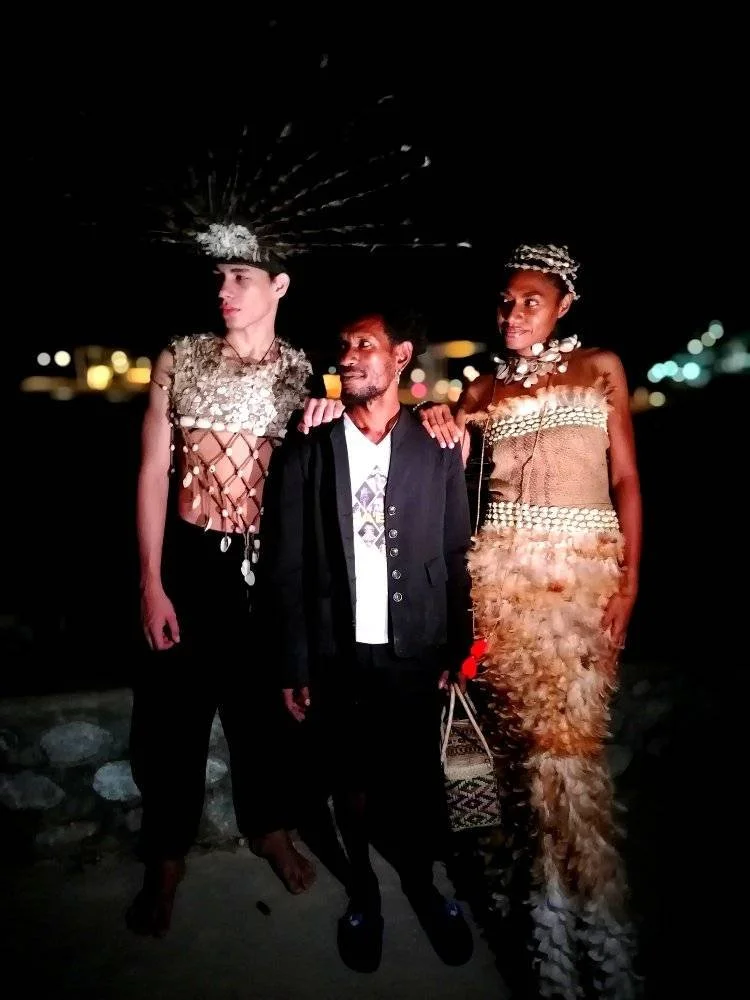
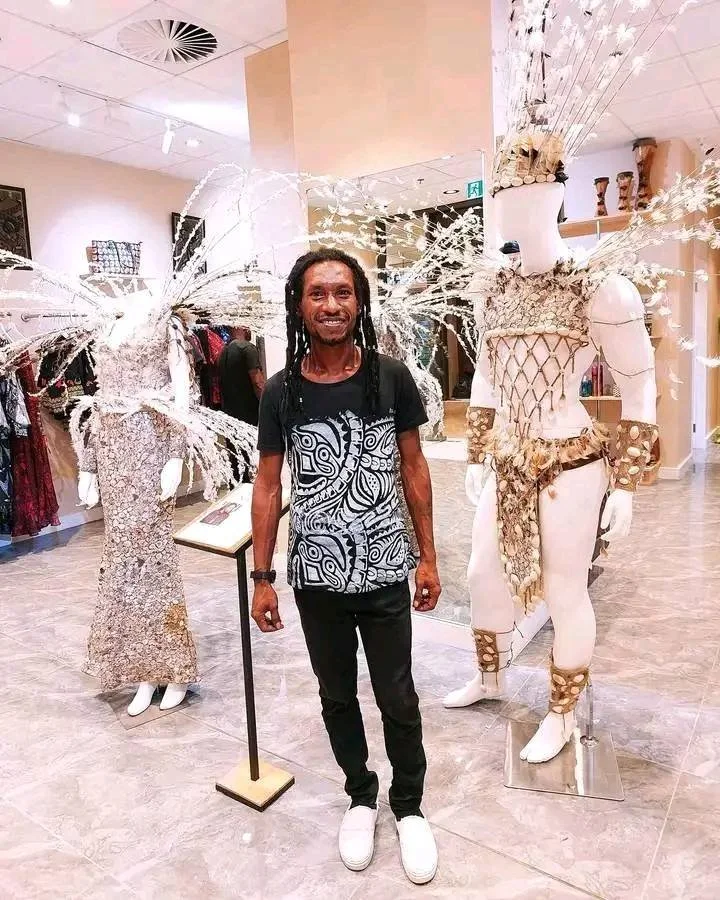
Natural textures and materials from the Motu-Koitabu world are woven directly into his garments, creating pieces that feel both deeply traditional and strikingly modern.
Much of his inspiration comes from revareva tattoo patterns, the iconic Motuan designs that symbolize identity, history and belonging. These patterns often become silhouettes, layered textures or structural elements within his garments, transforming ancestral symbolism into contemporary fashion.
William describes his aesthetic in three words:
“Culture. Couture. Iconic.”
And it is precisely this fusion that defines his work.
A Designer Forged Through Struggle
William’s path into fashion has never been easy.
He did not complete Grade Eight, and as a teenager he began sewing garments and selling them on the streets of Port Moresby.
It was not about chasing a dream.
It was about survival.
“I’m the breadwinner in my family,” he explains.
Through sewing, William supports his parents and two younger siblings, a responsibility he has carried for many years.
His early garments were sold through church groups, friends and word of mouth. Slowly, people began noticing the quality of his work — particularly his ability to create complex wedding gowns.
In 2010, when he created an intricate wedding dress for a friend, something changed.
People began asking him to design gowns for them as well.
Soon the requests kept coming.
And quietly, a designer emerged.
Building a Brand from a Settlement
In 2021, William took an important step.
He created his Facebook page:
Maba’s Modern Pacific Wear.
For many designers around the world, social media is simply marketing.
For William, it was necessity.
Living in a settlement in Port Moresby made it difficult for customers to reach him physically, and renting a shop was expensive. Instead, he photographed his garments and shared them online, allowing customers to connect with him directly.
That page became his marketplace.
And slowly, his audience began to grow.
From his home in Six Mile, William continues to design and sew most garments himself, occasionally assisted by family members.
Creativity, he says, runs through his entire tribe.
Layers of Craftsmanship
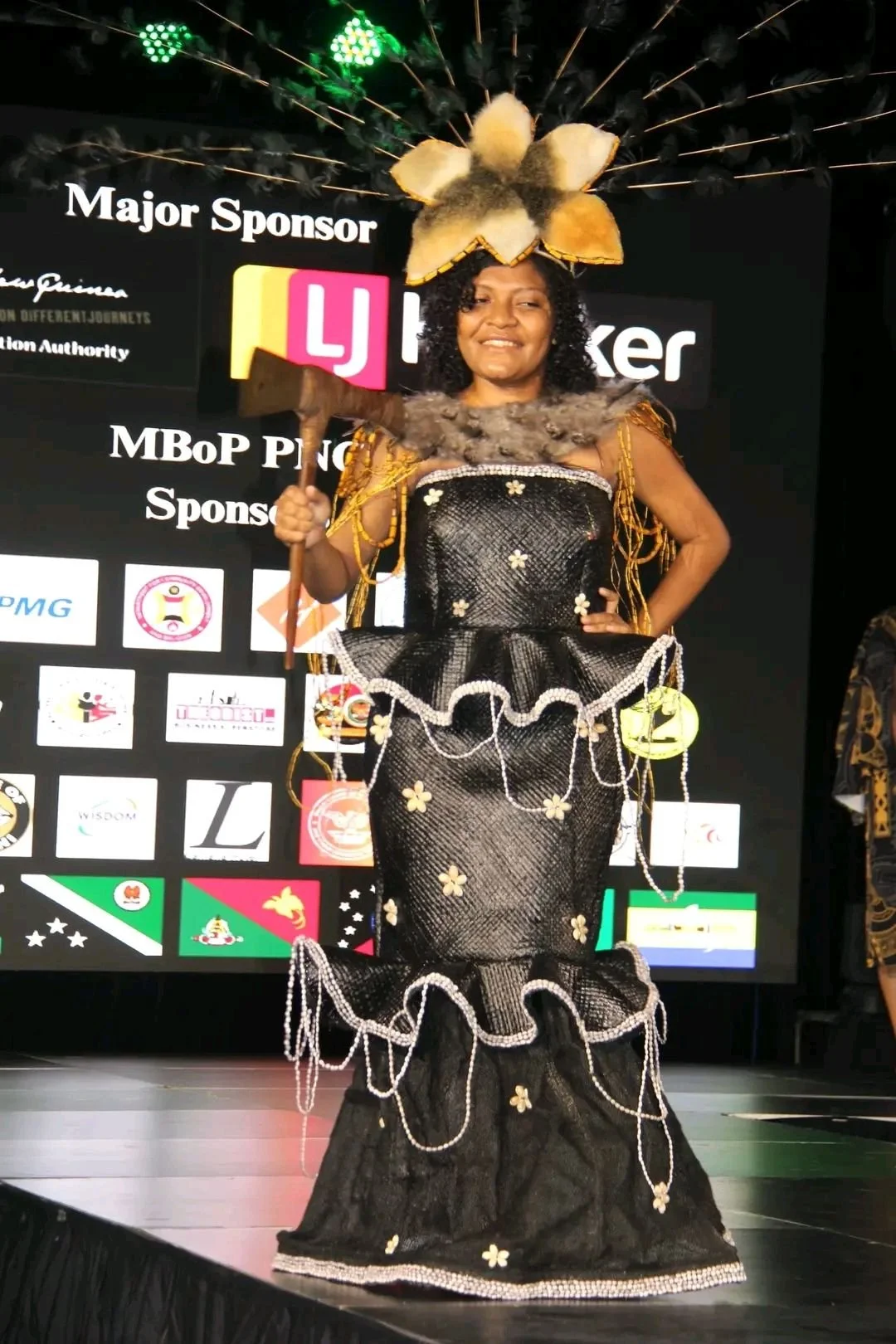
William is especially known for his wedding gowns and layered dresses, some of which contain three to seven layers of fabric.
The complexity is deliberate.
“I love the challenge,” he says.
Each gown requires careful planning, layering and shaping until it reaches the dramatic silhouette he envisions.
When working with brides, William helps clients select fabrics within their budget, often sourcing materials from Tango, one of the few shops in Port Moresby offering the variety he needs.
Although fabrics can be expensive, William sees this as an important part of delivering something rare in Papua New Guinea:
custom couture gowns created locally.
For many brides, this means having access to beautiful gowns without paying the high cost of importing dresses from overseas.
Breaking Barriers
William has also faced criticism along the way.
Many people have told him directly that sewing and fashion are “women’s work.”
At first, those comments made him hesitate.
But as he began connecting with other creatives in the industry, he realized something important.
Men belong in fashion too.
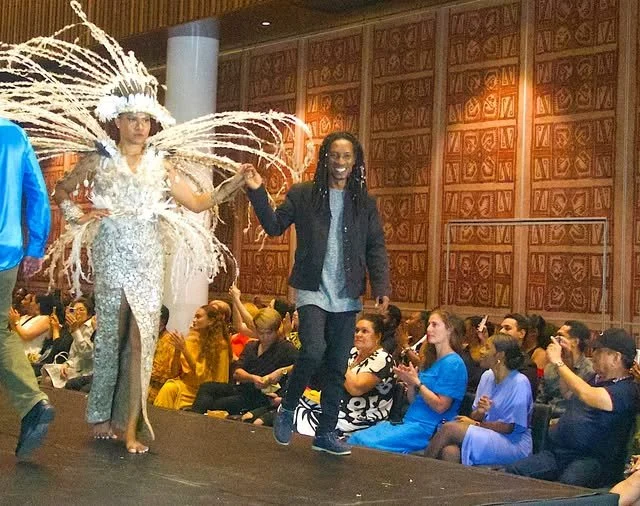
Today, he proudly stands as the only male designer among a group of talented women designers participating in PNG Fashion Week’s runway events.
For William, that position brings both pride and pressure.
“You know the other thing is about making the Motuan people proud,” he says.
“It’s a bit nerve-wracking, but this has been a long journey for me.”
Designing the Story of the Sea
William’s runway collections are deeply rooted in Motu-Koitabu cultural identity and the natural landscape of the coast.
Black represents the night sky, the moon and the reflection of stars across the sea.
Yellow represents the rising and setting sun over the ocean.
Together, the colours echo the rhythms of nature that have shaped Motuan life for generations.
Through layered couture designs, William transforms these natural elements into garments that feel both ancient and modern.
Above all, he wants audiences to feel pride in culture when they see his work.
The Power of the Runway
For William, POM Fashion Week and PNG Fashion Week represent more than a runway.
They represent recognition.
“They make me feel valued,” he says.
“They make me feel safe to express my ideas and dreams.”
For emerging designers across Papua New Guinea, platforms like these provide the opportunity to showcase their creativity, connect with audiences and build their brands.
They also help market and elevate designers, allowing them to sell their work to wider audiences.
For William, the runway also offers something deeply personal.
Visibility.
“For a long time people wore my garments,” he explains.
“But they didn’t know the face behind them.”
Now they do.
Challenges Behind the Craft
Like many designers working independently in Papua New Guinea, William faces daily challenges.
Limited funding.
Power outages.
Inflation.
Water shortages.
And the reality that many people still underestimate the value of handcrafted design.
Yet he continues.
Because fashion, for William, is not simply a job.
It is purpose.
A Vision for the Future
Within the next three years, William hopes to achieve something simple but powerful:
owning his own shop and selling his designs internationally.
And if a major international buyer approached him tomorrow?
His answer is immediate.
“I would jump at the opportunity.”
The Designer Behind the Machine
William describes himself as a late-night creator, sketching designs before bringing them to life through fabric.
The soundtrack of his studio is not music.
Instead, it is the sound of the neighbourhood — people talking and laughing in the background.
Coffee fuels the long nights of creativity.
And despite his humble beginnings, many people are surprised by one thing:
That a small Central Province man can create such massive couture garments.
A Warning Label for Culture
If William’s brand had a warning label, he laughs, it would read:
“Warning: You are about to experience cultural couture.”
If his collection were a dish, he says it would be a banana.
Because when you peel it, you discover something sweet inside.
If his fashion style were a movie title?
Maleficent.
Bold.
Dramatic.
Unforgettable.
A Story Worth Telling
For William Maba Bray, success has never been about prize money.
Years ago, when he first stepped onto the runway at the NGCB Paradise Runway hosted by PNG Fashion Week, a K10,000 prize was offered for the best designer — a moment that recognised his talent and marked an important milestone in his journey.
Today, the runway is no longer about competition.
It is about storytelling and cultural expression.
After years of sewing quietly from his home, selling garments through friends, churches and social media, William is finally stepping forward.
“I want people to see my creations and my story,” he says.
And standing on the runway at POM Fashion Week, surrounded by designers, models and audiences celebrating creativity, that story is finally being told.
A boy with a sewing machine.
A designer shaped by culture.
A Motu-Koitabu artist turning tradition into couture.
One stitch at a time.