ANDREW KULINIASI: CARRYING THE STORIES OF THE TUMBUNA
In every nation, there are artists who do more than perform, write, or create. There are those who carry memory, who gather fragments of history, culture, identity, and spirit, and weave them into stories that remind people who they are. In Papua New Guinea, one of those voices belongs to Andrew Kuliniasi — a playwright, director, and creative storyteller whose work is rooted deeply in the living histories of his ancestors.
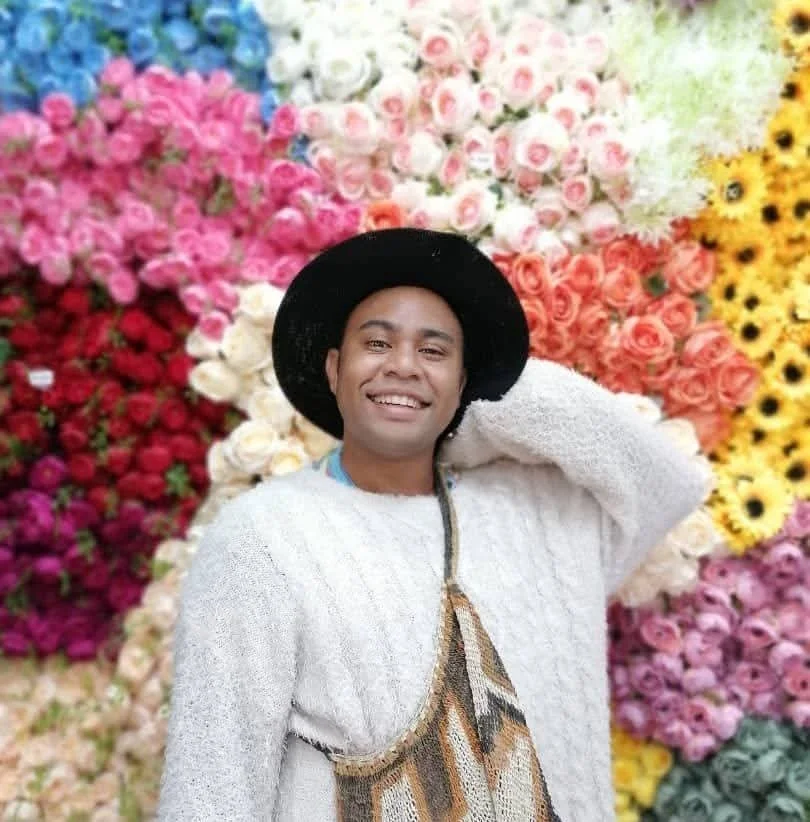
Born of Milne Bay and Central Province heritage, Andrew’s creative journey is not simply about theatre or performance. It is about responsibility. It is about lineage. It is about honouring the stories of the Tumbuna and ensuring that the voices of the past continue to echo through the present and into the future.
Raised by Stories
Andrew’s earliest classroom was not a stage or a theatre hall. It was the home of his grandparents.
Like many Papua New Guinean children raised within strong cultural families, Andrew grew up surrounded by storytellers. His Bubu Nana, Bubu Daddy and Bubu Baba shared stories that stretched across generations — tales of love, sacrifice, village legends, cultural traditions, and lived experiences shaped by both ancient customs and modern change.
For Andrew, these moments were more than bedtime stories. They were lessons in identity.
Even today, he says the thing he treasures most is simply sitting with his grandparents and listening. “Even now with my two remaining Bubus, all I want to do is sit and listen to them tell me a story.”
Among the stories that shaped him most deeply is the history of his grandfather’s clan — the Meisoga clan — and their migration to Misima Island, a story marked by struggle, warfare, endurance, and conquest.
From that story he learned something powerful: he comes from warriors.
From another side of his family, his Bubu Nana shared the history of ancestors who were Fijian missionaries, grounding his sense of faith and spirituality. And from his Bubu Baba, who worked for nearly thirty years as a maid at the Australian High Commission while raising six children alone, Andrew learned the values of humility, discipline, and perseverance.
These were not abstract lessons. They became the foundation of his worldview.
A Different Kind of Boy
Andrew often describes himself as a child who did not quite fit the traditional expectations of boyhood.
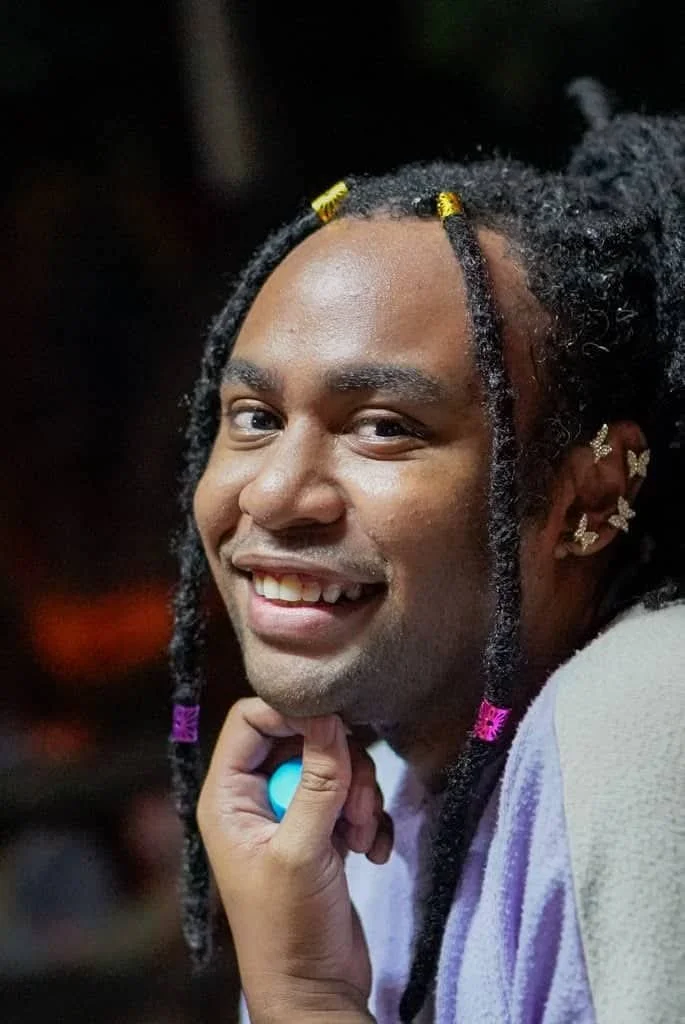
He was sickly growing up. He was not the boy climbing trees or chasing rugby balls. Instead, his grandmother saw something else in him — something artistic.
She believed deeply in the idea that a child should be raised according to their talents. In Andrew, she saw a reflection of herself: a singer, a dancer, and a storyteller.
So she taught him.
“My Bubu Nana taught me how to sing and dance. She passed on the artistry she had set aside.”
Today, she jokes proudly that none of her granddaughters inherited her creative spirit — it was her grandson who did.
Writing the Stories He Could Not Find
At just sixteen years old, Andrew wrote and directed his first play.
The inspiration was simple and profound. He was performing Shakespeare and musicals on stage, but he noticed something missing. There were no stories about people like him.
“I was performing theatre and wondering — where are all the PNG stories? I didn’t see them. So I wrote one.”
That play told the story of Sine Kepu of the Meisoga clan, a figure from his own ancestral lineage. What made the story so powerful was that it was not myth or legend. It was documented oral history, passed down through generations. The story belonged to a real person who lived thirteen generations before him.
Writing that story gave Andrew something he had never felt before — a deep sense of power and belonging. “I’ve never felt more powerful knowing I come from warriors.”
The Responsibility of Telling Stories
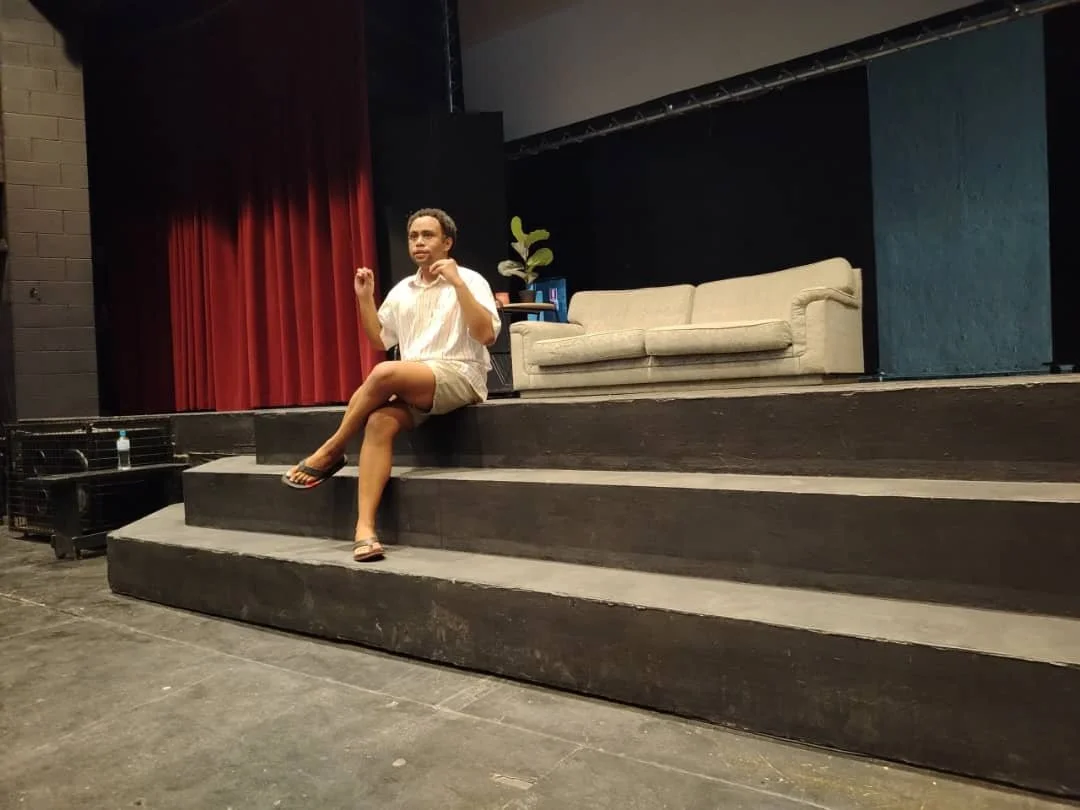
For Andrew, storytelling is not entertainment alone. It is a sacred responsibility. When he brings a story to the stage, he approaches it with careful respect for the communities and ancestors it represents. “I need to know the story intimately and be blessed by the people to carry it,” he explains.
In Papua New Guinea, stories are not simply narratives. They belong to clans, villages, and entire cultural histories. To misrepresent them is not just a creative mistake — it is a cultural offence. “If I get the story wrong, I offend thousands of people connected to that story.”
His approach is deliberate:
First, understand the story completely. Then tell it truthfully. Only after that can creative interpretation begin. And even then, he ensures that elders and knowledge holders verify the story before it reaches the stage.
Because these stories do not belong to him alone. They belong to the Tumbuna.
Theatre as a Time Capsule
Papua New Guinea has one of the richest oral storytelling traditions in the world. Yet oral history faces a modern challenge — stories can disappear if they are not preserved. Andrew believes theatre offers a powerful solution.
“Theatre creates a time capsule for our stories. It preserves them and retells them for the next generation.”
For young artists, the message is simple: know your culture. Even knowing a small part of one's cultural heritage can unlock powerful creative expression. But Andrew also warns that Papua New Guineans must protect ownership of their stories.
Too often, outsiders attempt to tell stories they do not truly understand. “We need to push for the ownership of our stories.”
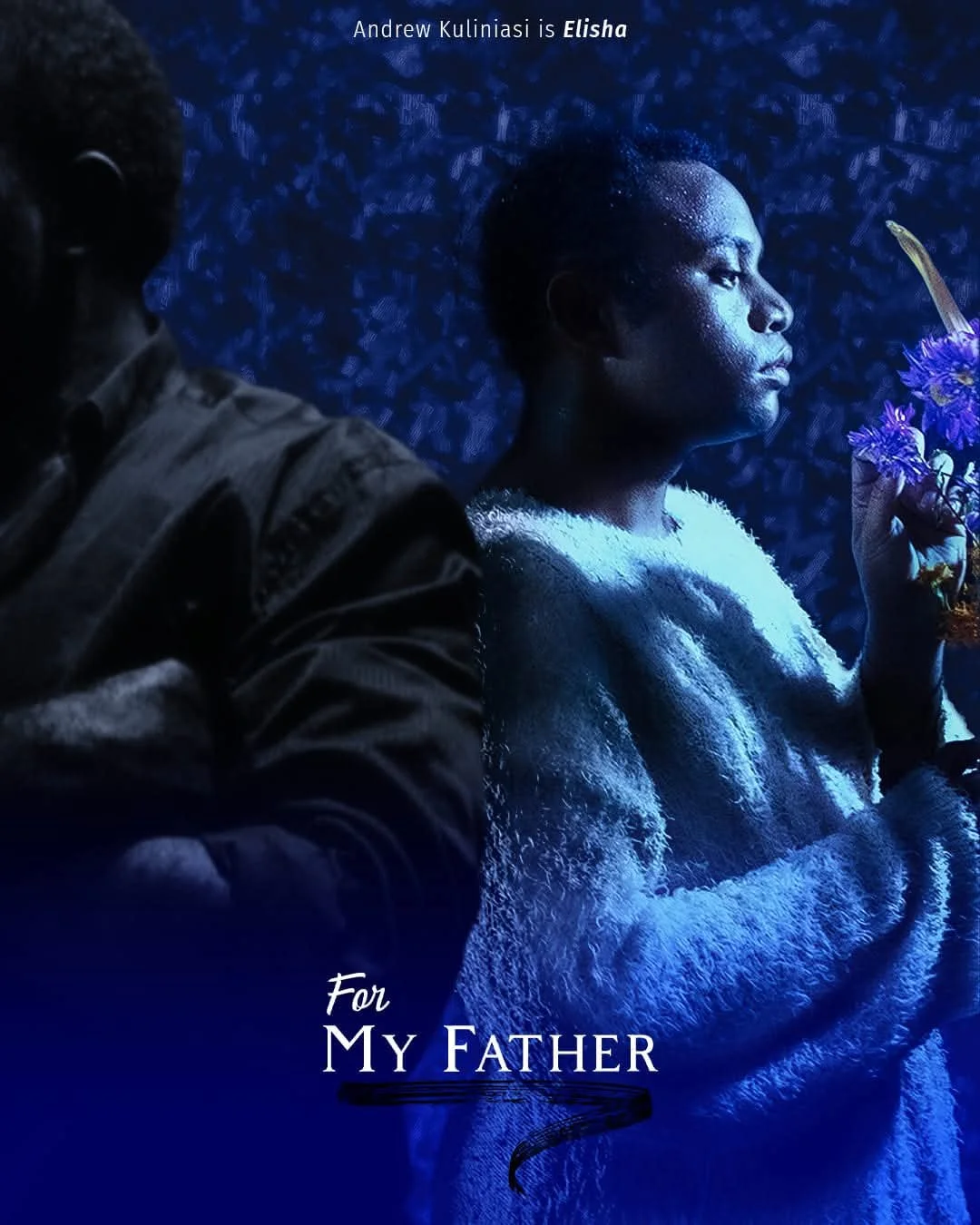
Where Theatre Meets Fashion
Andrew’s storytelling talents have not been limited to theatre. He has also served as Creative Director for PNG Fashion Week, where he brought a unique narrative approach to runway productions.
In his hands, fashion shows became something more than clothing presentations. They became storytelling experiences. Designers’ inspirations were translated into poetry, stage direction, visual narratives, and cultural symbolism.
“The runway is in service to the designer,” he says.
Fashion, like theatre, tells stories. But instead of spoken dialogue, fashion expresses narrative through bilás, pattern, movement, and design. Where theatre performs a story, fashion allows people to wear the story.
A New Generation of Creators
At just 26 years old, Andrew belongs to a generation of Papua New Guinean artists entering a rapidly evolving creative landscape. For him, the opportunities today are unprecedented. “With social media, you already have a platform. All you need is a story and a way to express it.”
Yet challenges remain — especially funding and broader recognition of the arts as a vital part of national development. Andrew believes awareness is key. “When people understand the importance of the arts, they begin to appreciate and support them.”
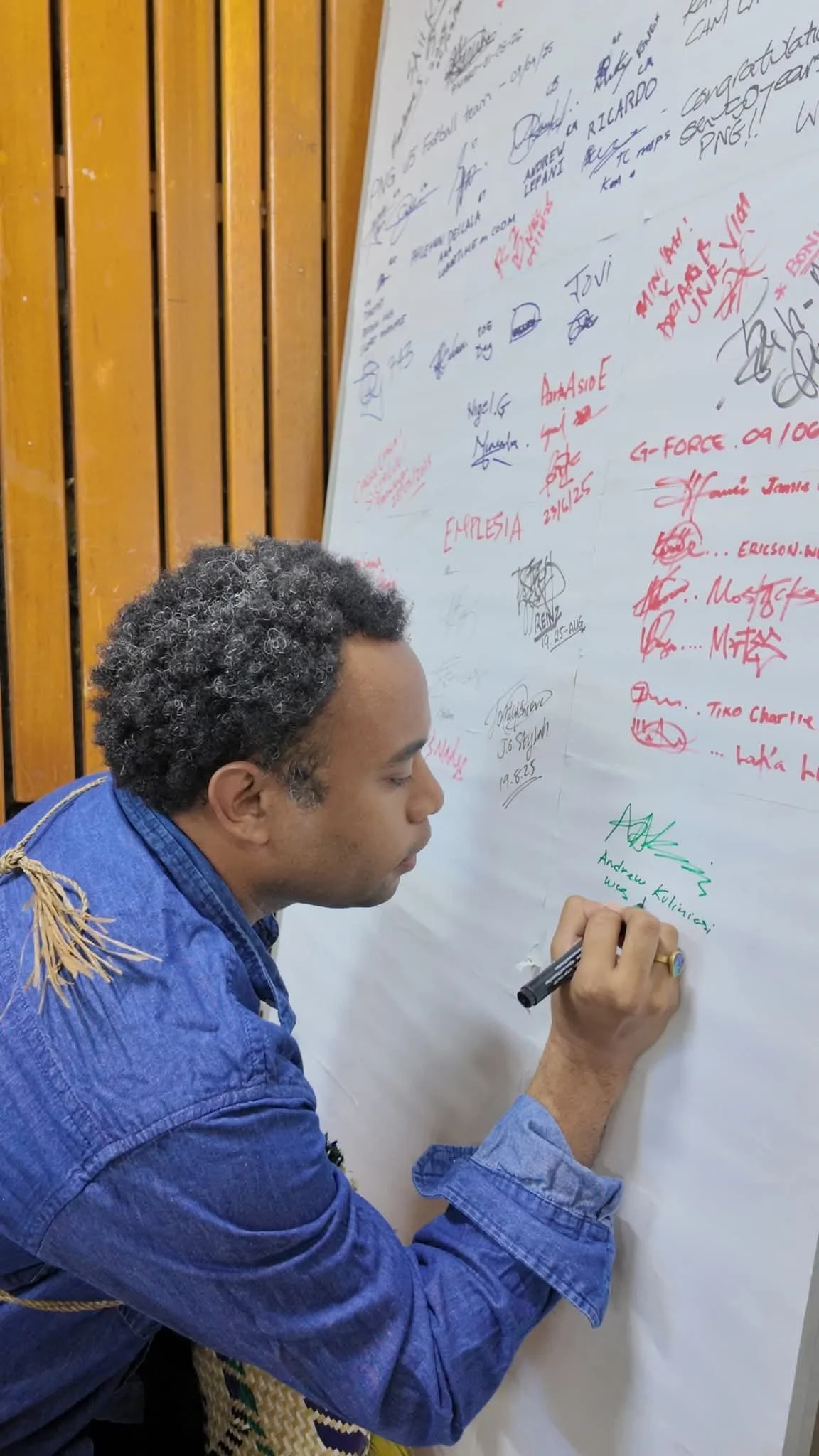
Inspired by People
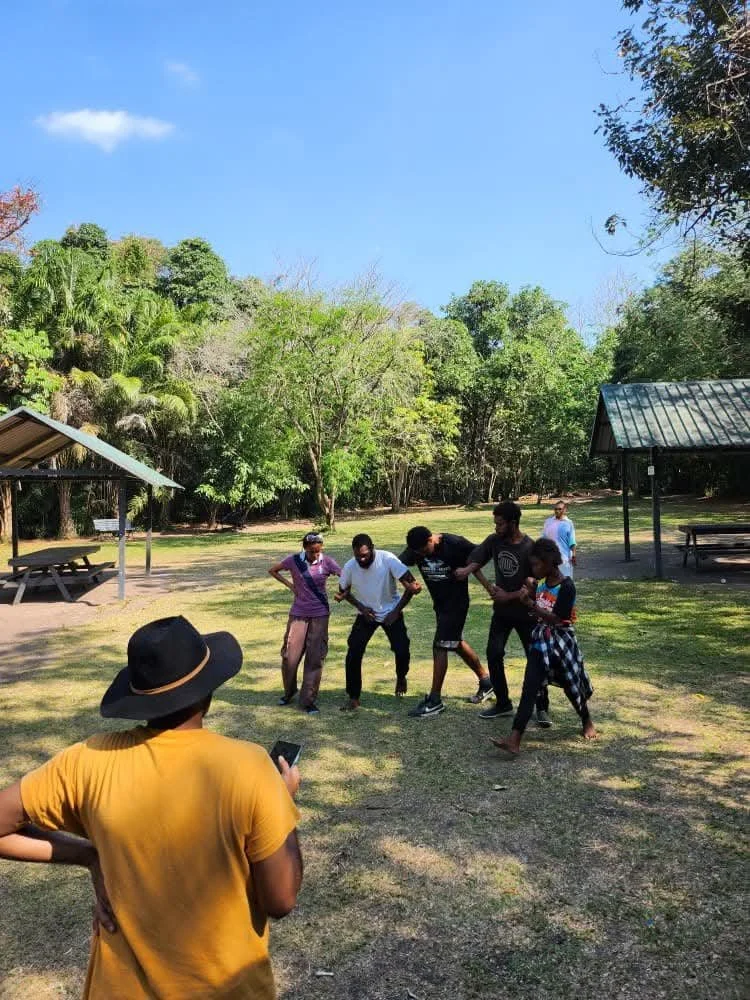
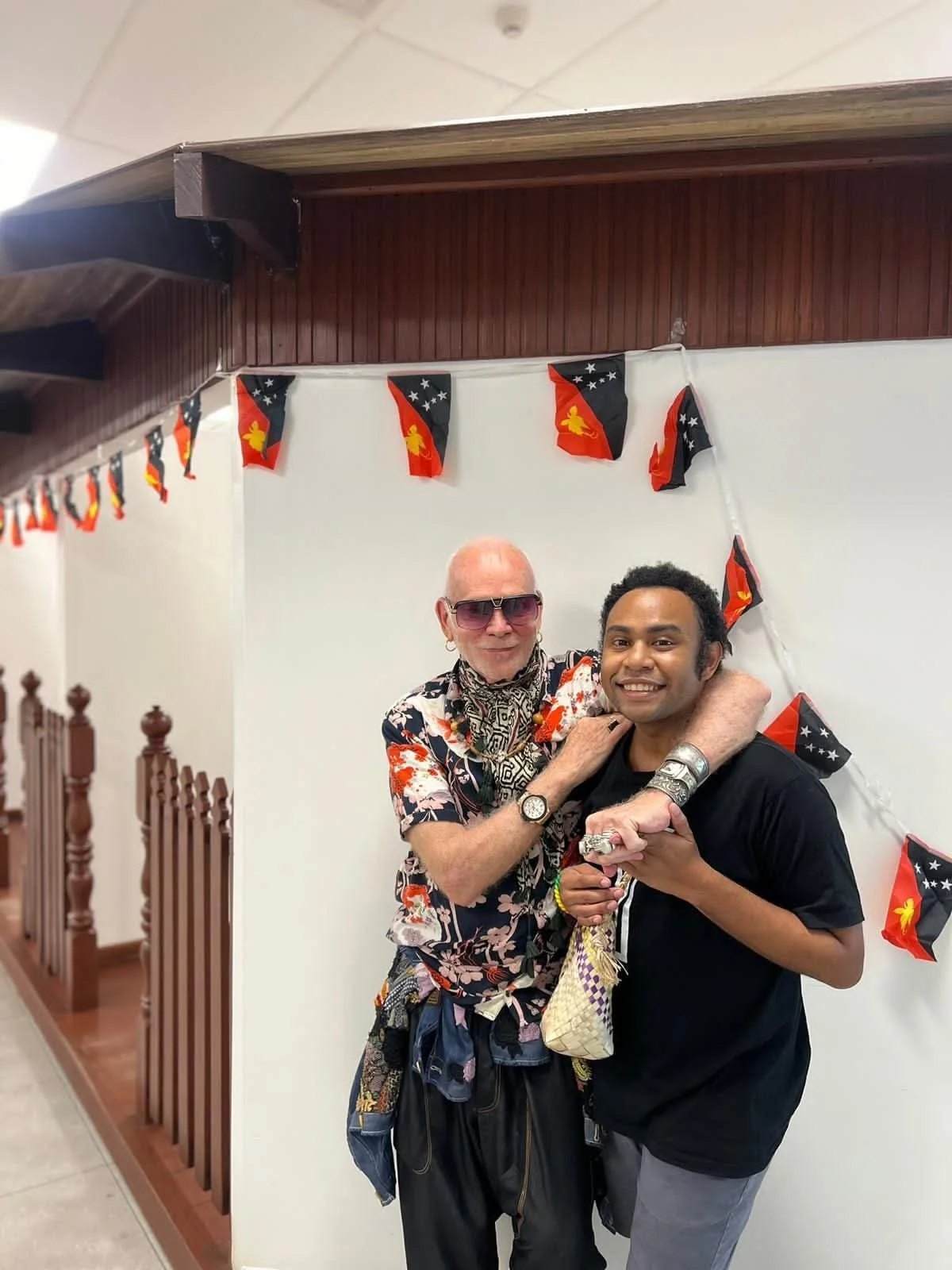
Despite his growing success, Andrew remains deeply grounded in the people who shaped his path. He credits mentors and supporters such as Sylvia Pascoe, Tania Bale, Nadya Parascos, and Philma Kelegai for supporting his journey as an artist.
He also honours the creative pioneers who came before him — figures like Nora Vagi Brash, John Bili Tokome, John Kasaipwalova, Markham Galut, Lubi Gwale, and Rodney Kove.
“These are the giants whose shoulders we stand on.”
Stories Still Waiting to Be Told
Looking ahead, Andrew hopes to tackle stories that are often avoided. Stories about difficult social issues. Stories that provoke conversation. Stories that challenge society to reflect.
Because for Andrew, the purpose of art is not only beauty or entertainment. It is transformation.
The Legacy of Conversation
When asked what impact he hopes his work will leave on Papua New Guinea’s cultural landscape, Andrew’s answer is simple but powerful.
He hopes his stories will create conversations. Not easy conversations. Difficult ones. The kind that societies often avoid — but desperately need. Because sometimes the most powerful way to speak truth is not through politics, or speeches, or arguments. Sometimes the most powerful way is through art.
And through artists like Andrew Kuliniasi, the voices of the Tumbuna continue to speak.